Clothing & Materials
Conscious
Clothing
Clothing is the thing we wear longest and question least, natural fiber clothing included. It sits against the skin all day, goes through the wash every week, and outlives most of our good intentions about it.
This page is about the natural fibres: linen, cotton, wool, silk, hemp. What they are, how to tell the real ones from the ones wearing their name, and which of the clothes people actually buy we would pick.
The rest of the wardrobe, polyester tees and stretch jeans included, is scored on the same ruler on Everyday Clothing.
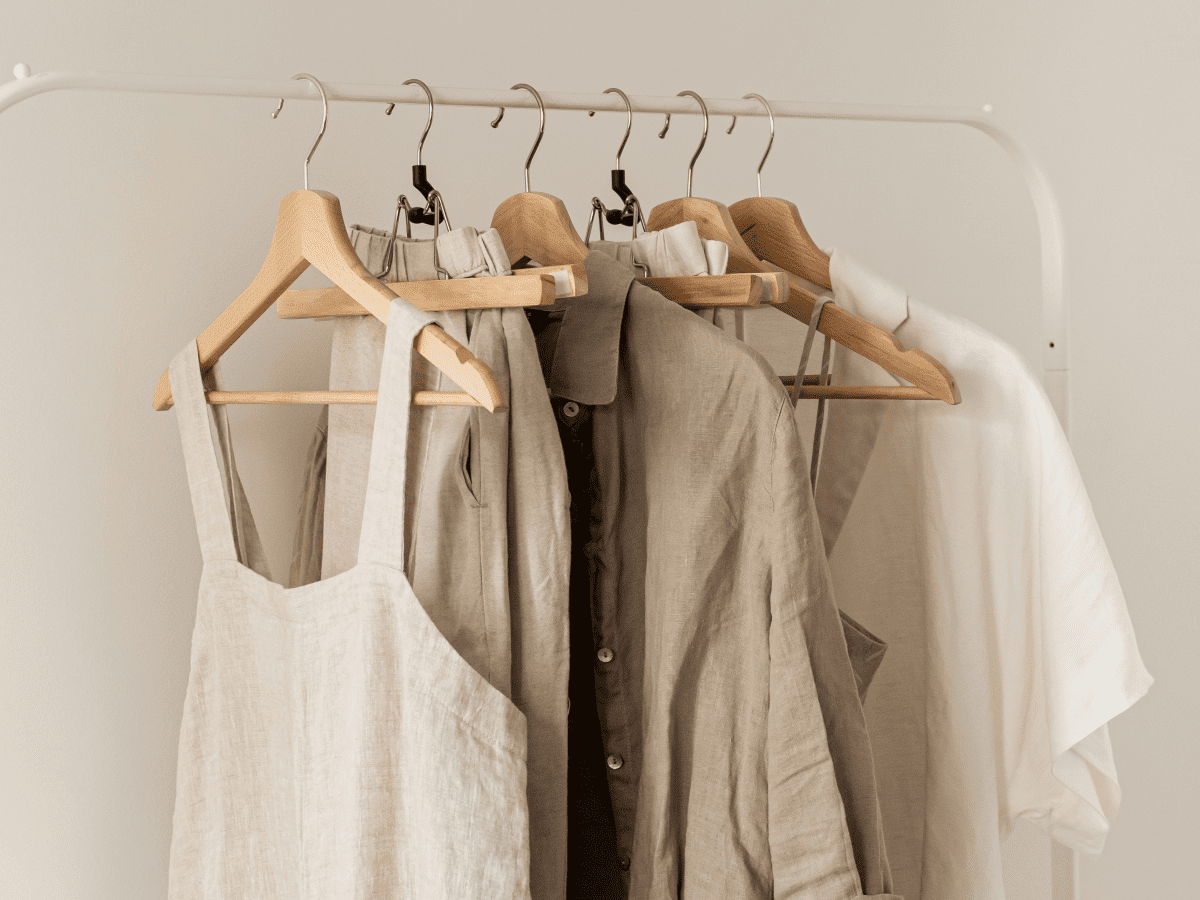
We went looking for natural fibre on Amazon USA, using Amazon’s own filters. We filtered women’s clothing by “Linen”, sorted by best sellers, and read the fabric line on every one of the top twelve.
One was 100% linen. Three were linen blended with cotton or TENCEL. Two just said “Linen”, with no percentage. And three, sold under the linen filter, contained no linen at all: they were 100% polyester.
Under “Silk”, none of the top ten contained silk. Under “Cashmere”, one of the top ten contained any, at 5%. Under a search for merino, the best sellers were socks, and not one was pure wool.
Nobody is lying, exactly. The filter is a tag, and the tag is a hope. But it means the word on the screen and the fibre on your skin have quietly parted ways, and the only place they still meet is the small print on the fabric line. So that is where we read, and that is what this page is built on.
The Materials
What clothes are actually made of
Every fibre comes from one of three places: a plant or an animal, a plant dissolved and rebuilt, or oil. We score two things from that. Frequency asks how far the fibre travelled from where it grew. Gaia asks where it goes when you are done with it. Here is how the common ones read.
Scroll table sideways →
| Fibre | Where it comes from, and what it means | Frequency ceiling | Gaia ceiling |
|---|---|---|---|
| Linen, hemp | Bast fibre from the stem of the flax or hemp plant. Strong, breathable, and it softens with every wash. Flax usually needs few or no pesticides, according to the brands that grow it; we look for a certificate rather than take that on trust. | 100 | 100 |
| Organic cotton | Cotton grown to an organic standard. It only counts on Shake with a licence number or another certificate number we can look up. | 100 | 100 |
| Conventional cotton | The same plant, grown with synthetic pesticides and often heavy irrigation. In the garment it is still a whole plant fibre; the cost was paid at the farm, so it is charged on Animals and Gaia, not Frequency. | 100 | 100less the farm rows |
| Wool, merino, silk, alpaca | Animal fibres. Warm, breathable, and they break down readily in seawater, where plastic fibres do not. | 100 | 100 |
| Lyocell / TENCEL | Wood pulp dissolved in a solvent that is mostly recovered, then spun. Plant-based, but chemically made. | 85 | 100 |
| , rayon, modal, bamboo viscose | Plant cellulose dissolved in chemicals including carbon disulfide and reformed as thread. It begins as a plant and ends as a processed fibre, which is why bamboo made this way must be labelled “rayon made from bamboo” in the US. | 70 | 100 |
| Natural fibre with a little elastane | Stretch. Small amounts lower both ceilings, step by step, by how much is in the fabric (see the table further down). | 95 to 70 | 95 to 70 |
| Polyester, nylon, acrylic, fleece, recycled polyester | Plastic, from oil. Sheds in every wash and does not break down afterwards. Recycled polyester is still polyester; it earns no credit on Shake. | 55 | 40 |
We read the main fabric, the one covering your body. Thread, zips, buttons and labels under 5% of the garment do not count against it, with one exception: metal parts that sit against your skin (see below). Shake does not score fabric in Hertz: those figures were never peer-reviewed, and the readings were reportedly taken in a unit of length.
Shopper cheat sheet · Where your clothes go
Cotton goes home. Polyester never leaves.
Every wash sheds tiny fibres into the drain. Researchers put them in wastewater, lake water and seawater and waited forty days. Here is how much of each one was gone.
A blend breaks down at about half the rate of cotton, because the cotton half goes home and the plastic half stays behind.
0
Polyester, nylon and polypropyleneshowed virtually no breakdown in seawater, where wool and viscose broke down readily.
<1%
of clothing materialis recycled into new clothing. “Recycled” rarely means “recycled again.”
60%
of clothing in Europeis synthetic fibre. Most of a wardrobe is quietly made of plastic.
Natural fibres
Linen, cotton, hemp, wool, silk: microbes recognise them and take them back.
Blends
The natural part leaves; the plastic part stays, as smaller and smaller pieces.
Plastic fibres
Polyester, nylon, acrylic, elastane, fleece. Recycled polyester too: it is still polyester.
How much plastic, how high the ceiling
Our Gaia score for a garment can go no higher than this, read off the main fabric on the label.
How Shake scores it
The more plastic in the fabric, the lower its Gaia score. Pure plastic tops out at 40.
We read the body fabric on the label. Natural fibre keeps its full score; every share of synthetic lowers the ceiling; plastic-dominant garments can never be a Shake Pick.
Sources: Zambrano MC, Pawlak JJ, Daystar J, Ankeny M, Cheng JJ, Venditti RA, Microfibers generated from the laundering of cotton, rayon and polyester based fabrics and their aquatic biodegradation, Marine Pollution Bulletin 2019 (North Carolina State University with Cotton Incorporated, which funded it; 40-day figures as reported by Cotton Incorporated); Hassan MM, Collie S, Brorens P, Fowler I, Marine biodegradation behavior of wool and other textile fibers, Water, Air, & Soil Pollution 2024 (funded by Australian Wool Innovation); Ellen MacArthur Foundation, A New Textiles Economy (2017); European Environment Agency, Plastic in textiles: towards a circular economy for synthetic textiles in Europe.
Awareness
What to be mindful of
Six things worth knowing before the next thing you buy. Some are well established, one is a caution for a defined group of people, and we have tried to tell you which is which.
“Linen” on the screen, polyester in the fabric
A shop filter is a tag a seller chooses, not a test anyone runs. On Amazon USA, three of the twelve best-selling dresses under the “Linen” filter were 100% polyester, and none of the ten best sellers under “Silk” contained silk. Most were polyester “satin”, which is a weave, not a fibre.
The fabric line is the one place a listing has to commit. Read it before the photo.
Source: Shake’s reading of Amazon USA women’s clothing best sellers, Material filters Linen, Cotton, Silk and Cashmere, and a merino search
A certificate in words is a claim, not a certificate
“OEKO-TEX certified” with no number cannot be checked by anyone, and OEKO-TEX itself treats a certification mentioned in text without its certificate number or institute as a misuse of its label.
It may well be true. But a number is the difference between a promise and something you can look up in sixty seconds, for free.
Source: OEKO-TEX Labelling Guide; OEKO-TEX certificate and label misuse notice (listed categories)
The dye covers the whole garment
The fibre is only half the story; the colour is on every thread of it. Some can release aromatic amines that the EU restricts in clothing worn against the skin, above 30 mg per kilogram. Most garments tested by regulators pass. Some do not: one Swiss survey found suspected-mutagenic amines above that limit in a quarter of its samples.
Dye chemistry is almost never published, so where no certificate we can check covers the dyed fabric, we score the worst case and say so.
Source: REACH Annex XVII, entry 43 and Appendix 8 (ECHA); Australian Competition and Consumer Commission surveys, 2013 and 2015; Journal of Consumer Protection and Food Safety, 2019 · Shake repository, azo dyes, Tier 1
Conventional cotton pays its bill at the farm
Cotton grown conventionally accounts for about 4% of the world’s pesticide use and about 10.5% of its insecticide use, by the cotton industry’s own advisory body’s figures. That is less than the 16% often quoted, and still a lot for one crop.
None of that is left in your shirt as far as anyone has shown; the harm is in the field and the water. So we charge it on Animals and Gaia, and lift it the moment a brand shows us an organic certificate number.
Source: International Cotton Advisory Committee data, via Shake repository, conventional cotton pesticide use and irrigation water use (both Tier 2)
The small parts that touch your skin
Buttons, rivets, snaps and zips are a sliver of a garment, so we ignore them, unless they are metal and sit on your skin. Nickel is the most common contact allergen in Europe: about one adult in seven is sensitised, which is why the EU caps how much nickel a jeans button or zip may release.
Most people never react. For the ones who do, a named nickel-free metal, or a corozo or wooden button, is a quiet kindness.
Source: REACH Annex XVII, entry 27; EN 1811:2023; EDEN Fragrance Study, Contact Dermatitis (age-standardised nickel sensitisation 14.5% across five European countries) · Shake repository, nickel release from garment metal parts, Tier 2
Plastic fibre does not go home
In a seawater test, wool and viscose broke down readily and polyester, nylon and polypropylene barely broke down at all. In another, laundry fibres from a polyester t-shirt broke down 0% in fresh water in forty days, against 77% for cotton.
And recycling is not the escape hatch it sounds like: less than 1% of the material used to make clothing is recycled into new clothing.
Source: Hassan et al., Water, Air, & Soil Pollution 2024; Zambrano et al., Marine Pollution Bulletin 2019; Ellen MacArthur Foundation, A New Textiles Economy (2017)
Conscious Alternatives
What to look for instead
Six things you can check yourself, on a listing or a swing tag, without taking anybody’s word for anything.
A fibre with a number beside it
“100% linen”, or a blend of natural fibres with both percentages, adding up to 100. “Linen” on its own is a mood, not a composition.
Standard: ShakeUp SOP v1.9, Part 4C
An OEKO-TEX number you can look up
Type it into the free OEKO-TEX Label Check. You want “valid”, product class I or II for anything against the skin, and a scope that names the finished, dyed fabric.
Standard: OEKO-TEX Label Check · Shake ruling, 20 October 2026
GOTS with its licence number
A real GOTS label carries a grade (“organic” at 95% or more, “made with X% organic” from 70%), the certifier’s name and a licence number. Missing the number, it is a sentence.
Standard: GOTS Licensing and Labelling Guide, via Oregon Tilth
Undyed, or dyed under a certificate
The oatmeal of undyed linen is the simplest answer to the dye question. Otherwise, look for a certificate that covers the dyed fabric, not just the yarn.
Standard: Shake repository, azo dyes; OEKO-TEX STANDARD 100
Buttons that are not metal, or a metal that is named
Corozo, wood, coconut, shell, fabric-covered: all fine. A metal button or rivet is fine too, if the brand names it as nickel-free or tests it to EN 1811.
Standard: REACH Annex XVII, entry 27 · Shake repository, nickel release
“Plant-based” read twice
TENCEL, modal and bamboo viscose start as wood or grass and are dissolved and rebuilt in a factory. Better than plastic on where they end up; further from the plant than linen on how they were made.
Standard: ShakeUp SOP v1.9, Parts 4C and 6.1 · US FTC textile labelling
Shopper cheat sheet · 1 of 2
OEKO-TEX, decoded in sixty seconds
It is the most common safety label in clothing, and the most commonly half-shown. A logo is a promise. A number is proof. Here is how to tell the difference before it touches your skin.
What it actually is
Not one lab, but an association of independent testing institutes. STANDARD 100 tests the finished textile for harmful substances left in it: restricted dyes, PFAS, formaldehyde and more.
It says what is in the fabric. It says nothing about how the fibre was farmed, how much water it used, or who sewed it.
Check any label in three steps (free, no sign-up)
On the swing tag, the care label or the product page. Numbers are case-sensitive.
oeko-tex.com/label-check
Is it valid? Which product class? What exactly is covered: the fabric, or the whole garment?
The four product classes
Lower class number, stricter limits. For clothing you wear all day, look for Class I or II.
I
Babies and toddlersThe strictest limits
II
Skin contactShirts, dresses, underwear, bedding
III
No skin contactJackets, coat fillings
IV
DecorationCurtains, upholstery
Good signs
- Number and institute shown together
- Label Check says “valid”
- Class I or II for clothes
- Scope names the finished, dyed fabric
Red flags
- “OEKO-TEX certified” in words, with no number
- A logo with no number or institute
- Certificate expired (they last one year)
- Number covers only one part, like the thread
Claiming it falsely is not a grey area: OEKO-TEX is a protected trademark, misuse is investigated, and certificates can be withdrawn.
How Shake uses it
If a brand shows us a number, we look it up. If it shows us a logo, we look for the number.
A checked certificate covering the dyed fabric answers our dye question. A logo on its own answers nothing, and the score says so. Telling us is free, and the number moves that week.
Sources: OEKO-TEX Labelling Guide (certificate number; testing institutes; trademark and claims usage); OEKO-TEX STANDARD 100 Factsheet (four product classes; one-year validity); Hohenstein, How to Read OEKO-TEX Certificates and Check Their Validity; OEKO-TEX Label Check, oeko-tex.com/en/label-check.
Shopper cheat sheet · 2 of 2
GOTS, or how to tell organic from “organic-ish”
The Global Organic Textile Standard follows the fibre from the field to the finished garment: the farming, the dyehouse, the factory floor. It is the closest thing clothing has to a full biography, if the label lets you read it.
How much of it is actually organic?
There is no “100% organic” grade in GOTS. If a GOTS label says it, something is off.
A real GOTS label carries four things
1
The GOTS logo2
The grade“organic” or “made with X% organic”
3
The certifierThe body that audited it
4
A licence numberThe one you can check
What GOTS keeps out of the garment
Azo dyes that release cancer-linked amines are prohibited; allergenic disperse dyes are restricted.
PFAS, including PTFE, are prohibited.
Alkylphenol ethoxylates, organotins, chlorophenols, phthalates, flame retardants and halogenated solvents, all on its restricted list.
Buttons, zips and other accessories must meet residue limits too.
Social criteria cover every certified facility, not just the farm.
Every hand-off between certified companies needs a transaction certificate.
GOTS and OEKO-TEX are not rivals
Best of both: a GOTS licence for how it was made, and a STANDARD 100 certificate for what remains in it.
Good signs
- Grade, certifier and licence number on the label
- A percentage when it is “made with”
- The brand names its certified suppliers
Red flags
- “GOTS certified” with no licence number
- “100% organic” on a GOTS label
- “Organic cotton” with no grade or percentage
How Shake uses it
Organic counts when we can read the number, not the adjective.
A GOTS licence number with its certifier removes our conventional-cotton charges and answers our dye question. “Certified organic” without a number is a sentence, not a certificate.
Sources: GOTS Version 7.0 and its changelog (prohibited azo dyes, PFAS including PTFE, sensitising disperse dyes); GOTS fact sheet, Control of Chemicals in GOTS Goods (restricted substance groups; accessories); Oregon Tilth, Requirements for GOTS Labels and Transaction Certificates (label grades, licence number); GOTS seminar, Using the GOTS Logo on and off product.
Behind the scoring
A garment is mostly one fabric and a handful of small parts. So we read the main fabric first and ignore anything under 5% of the garment, like thread, labels and most buttons, unless it is metal against your skin.
Then two ceilings. Frequency, set by how far the fibre travelled from the plant. And, new this week, Gaia, set by how much plastic is in the fabric, because plastic fibre is shown not to break down. A dress with a little elastane can still score well. A dress made of polyester cannot reach the top, and cannot be a Shake Pick.
Every certificate number a brand publishes, we now look up ourselves, for free, on the issuer’s own register.
How we scoreFeatured Brand
MagicLinen
A linen workshop in Vilnius that makes made-to-order linen clothing and home textiles, and the first garment on Shake to score 100%.
Why we featured it
Because it answered the one question almost nobody in clothing answers: what is the dye? Not with a sentence, but with a number. MagicLinen prints its OEKO-TEX certificate number on the product page. We typed it into OEKO-TEX’s own register, and it came back valid, rated for skin contact, and covering “100% linen bleached, dyed and finished”. That is the fabric, the colour and the finish, checked by someone who is not the brand.
Plenty of brands say the right words. This one gave us something to check, and it checked out.
100.00%
Deeply Aligned
People100
Animals100
Gaia100
Frequency100
Each pillar starts at 100. Evidenced concerns deduct, verified virtues add back, and some things set a ceiling instead. The overall is the average of the four.
What the number is made of
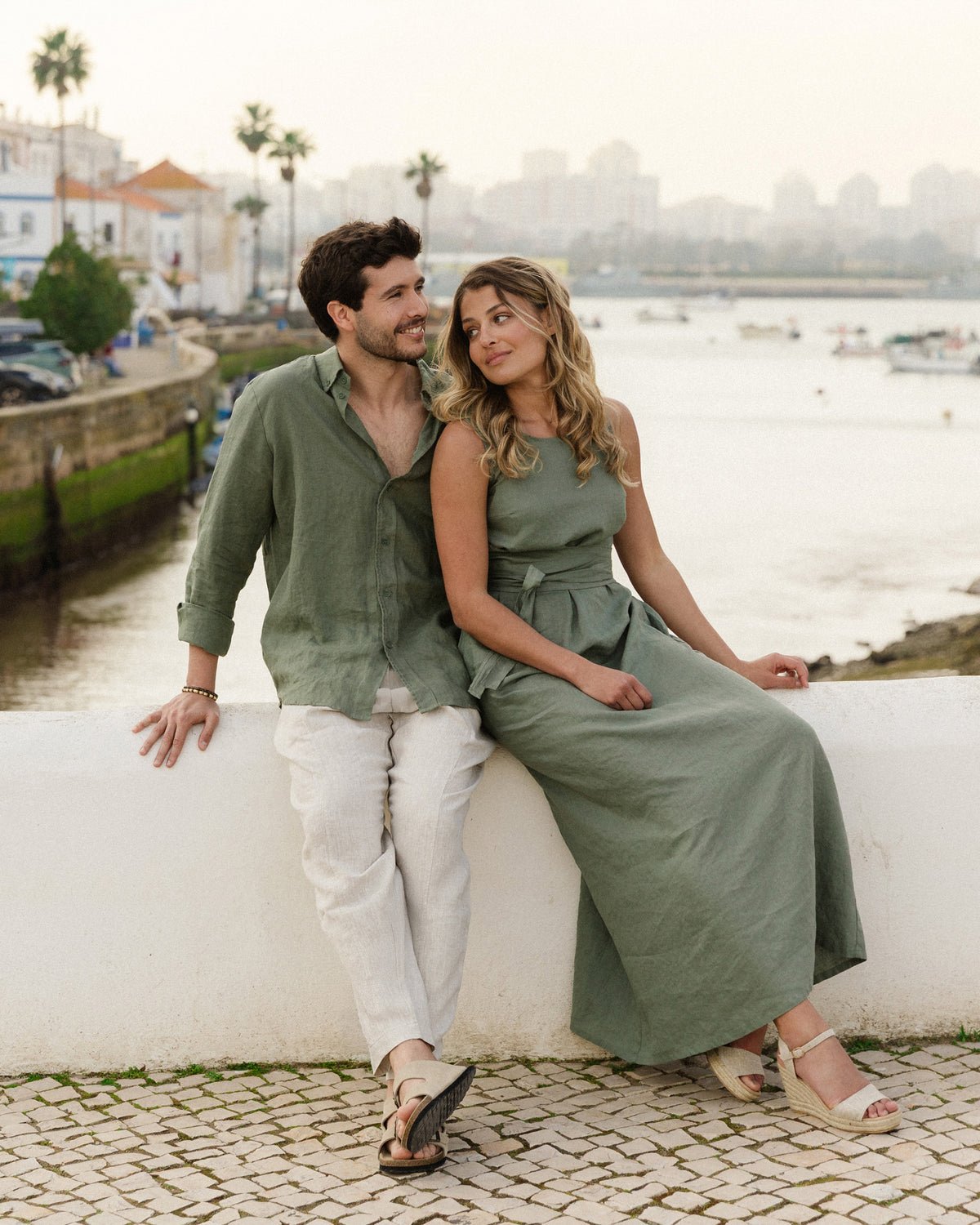
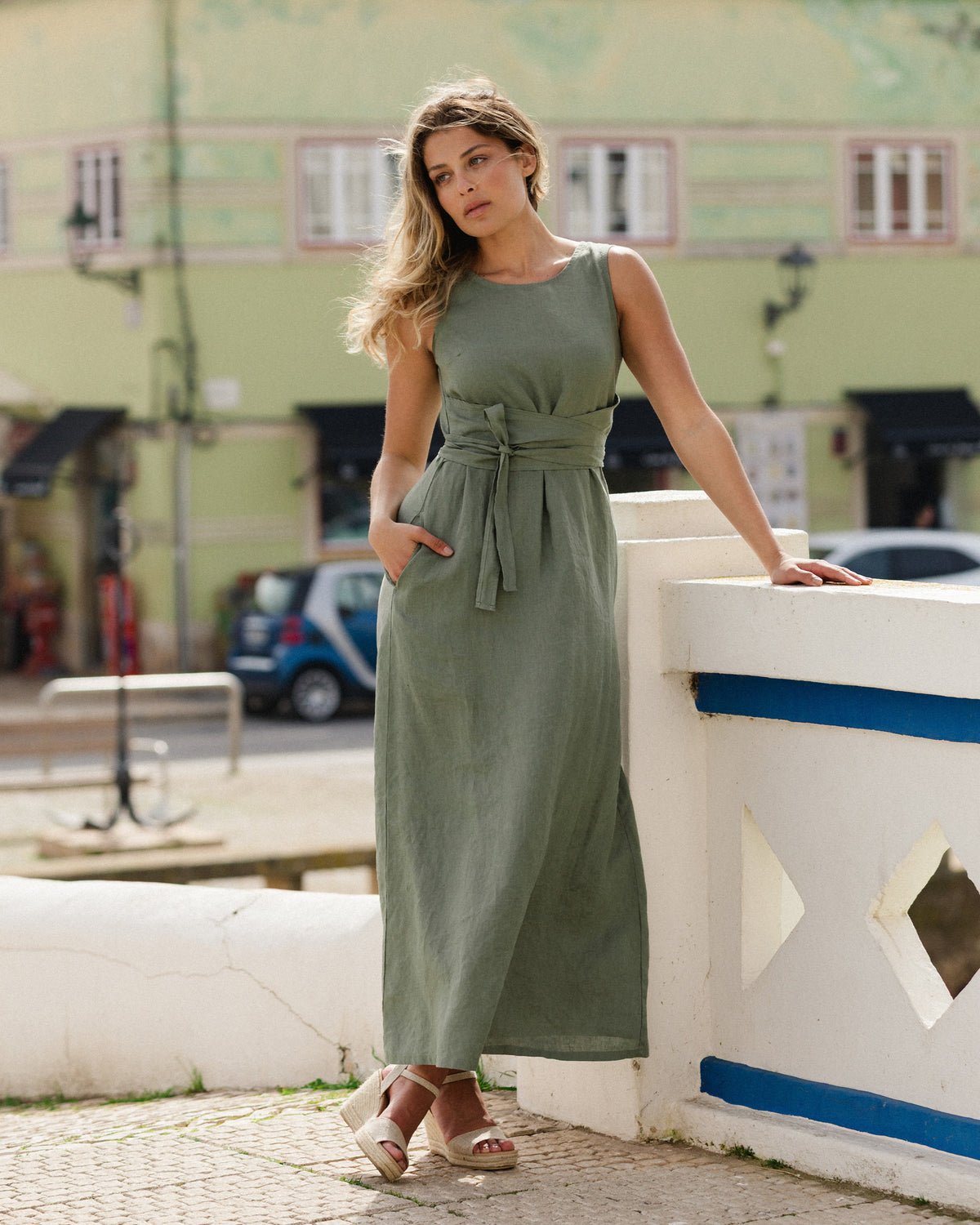
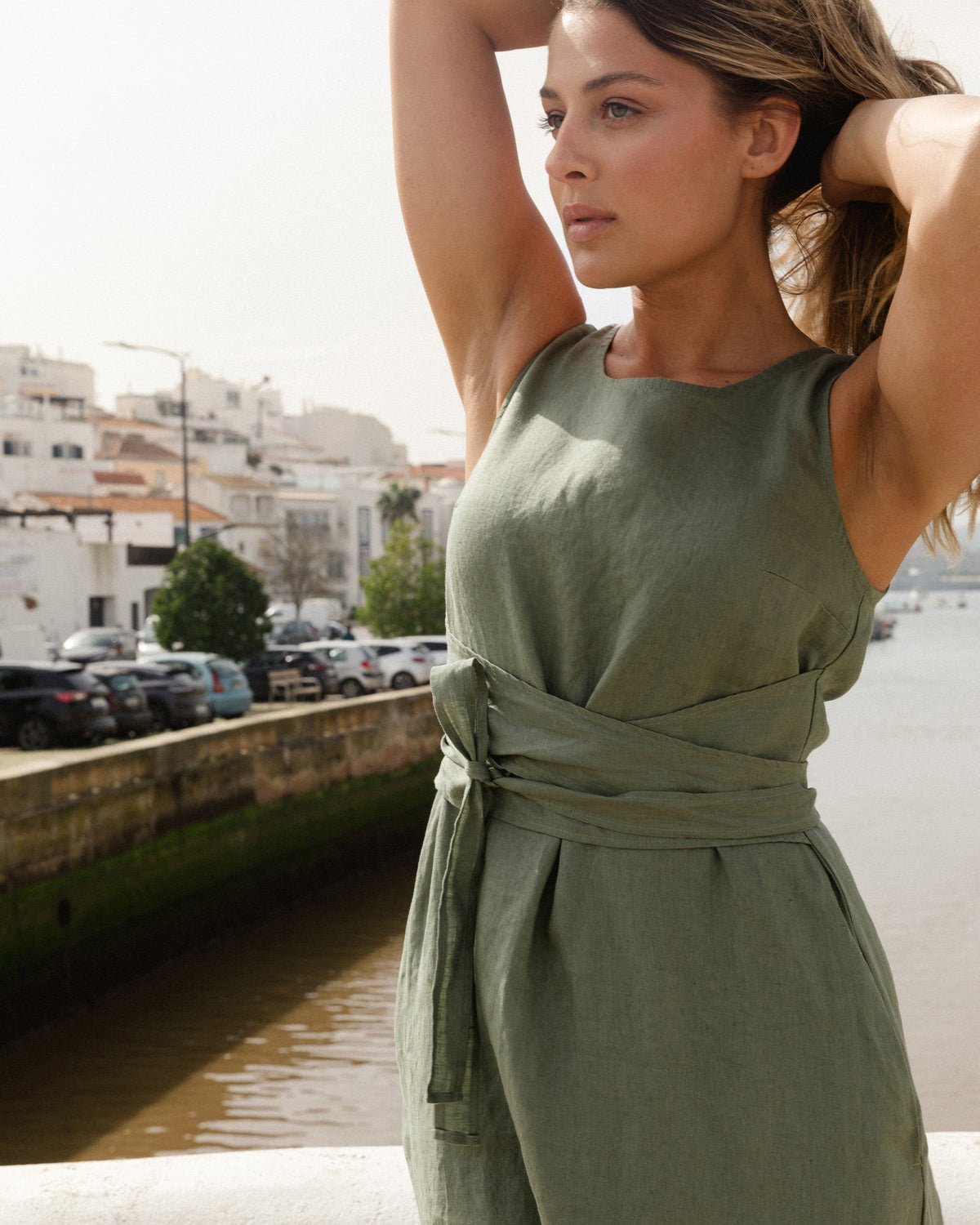
The garment we scored. The Long Linen Dress BORACAY: 100% linen, ties at the waist, two side pockets. No elastic, no synthetic fibre, nothing over 5% of the garment that is not linen.
People, 100. On every other garment on this page, People is held at 55, because we could not check the dye. Here we could. The certificate on the product page, 2019OK0776, is valid on the OEKO-TEX Label Check, issued under STANDARD 100 for product class II, the class for things worn against the skin, and its scope is woven 100% linen, bleached, dyed and finished. That answers our certificate question and our dye question in one go.
Animals and Gaia, 100. Linen is a plant fibre that returns to the soil, and none of our concern rows attaches to it: no cotton, no synthetic fibre, no finish claimed.
Frequency, 100. A single natural fibre, as close to the plant as clothing gets.
What we could not see, and why it does not matter here. The Label Check page does not name the testing institute, and the certificate covers the linen rather than the buttons or labels. Neither changes the number: the fabric is the garment, and there is no metal against the skin.
Sources: MagicLinen product page and FAQ; OEKO-TEX Label Check, certificate 2019OK0776 · ShakeUp SOP v1.9, Parts 4C and 5.5 · Shake rulings of 20 October 2026 (Label Check lookups, garment components).
Shake is a MagicLinen affiliate through Impact and earns a commission if you buy through the links on this card. That arrangement had no part in the number: it was reached under the same rules as every other garment on this page, from a certificate anyone can check. Because the brand pays us through this link, the working is written out in full above.
The photographs are MagicLinen’s own. Brand imagery appears on Shake only where a relationship exists. The words beside it are ours.
The Shelf, Scored
Natural fiber clothing: what sells, and what we would pick
These are the natural-fibre clothes Amazon USA shoppers buy most, and four brands we went looking for. Every one is 100% natural fibre or a blend of natural fibres. Every one scores Aligned or better, which makes every one a Shake Pick.
Read People first (open Read more on any row). It sits at 55 everywhere except MagicLinen, and not because of anything we found in the fabric. It is because no other brand here publishes its dye chemistry or a certificate we can check that covers the dyed fabric. Linen scores higher than cotton for one reason: without an organic certificate number, cotton carries what it cost at the farm.
Shake Picks
The best-scoring piece of each kind on this page. Every product that scores Worth a Pause or better carries the Shake Pick badge in the list below. Plastic-dominant clothing never does.
Linen
MagicLinen BORACAY Dress
100.00%Deeply Aligned
100% linen, and the only dye on this page we could check.
See where to buyCotton
Puff-Sleeve Striped Babydoll Dress
81.25%Aligned
100% cotton, and the best-selling pure-cotton dress we read.
See where to buyMen
COOFANDY Cotton Linen Trousers
81.25%Aligned
80% cotton, 20% linen; the top natural-fibre seller in men’s linen.
See where to buyAlready own something you love? Check it in ShakeUP and see which Shake Picks score higher.
Score what you useThe most sold
Natural-fibre clothing from Amazon USA best sellers: women’s clothing under Amazon’s “Linen” and “Cotton” material filters, and a men’s linen-shirt search, grouped by fibre. Within each group the order is Amazon sales rank, not our score. We read the fabric line on every listing and kept only natural fibre; the four brands we scored ourselves sit at the end of their group.
| Product | Shake score | Band | |
|---|---|---|---|
| Linen | |||
Rainday Linen Maxi DressAmazon USA women’s linen #3 · 70% linen, 30% cottonRead morePeople55Animals90Gaia80Frequency100 No organic certificate number is published, so the cotton carries our two conventional-cotton rows: pesticide use in growing (10 off Animals and Gaia) and irrigation water (10 off Gaia). A GOTS licence number with its certifier returns it to 88.75%. | 81.25% | Shake PickAligned | See where to buy |
100% Linen Slip DressAmazon USA women’s linen #10 · 100% linenRead morePeople55Animals100Gaia100Frequency100 Pure linen, the best fibre on our scale. People sits at 55 because the listing publishes no dye chemistry and no certificate covering the dyed fabric. Publish one we can look up and it rises. | 88.75% | Shake PickAligned | See where to buy |
100% Linen Spaghetti-Strap DressAmazon USA women’s linen #15 · 100% linenRead morePeople55Animals100Gaia100Frequency100 Pure linen, the best fibre on our scale. People sits at 55 because the listing publishes no dye chemistry and no certificate covering the dyed fabric. Publish one we can look up and it rises. | 88.75% | Shake PickAligned | See where to buy |
100% Linen Button-Down Midi DressAmazon USA women’s linen #16 · 100% linenRead morePeople55Animals100Gaia100Frequency100 Pure linen, the best fibre on our scale. People sits at 55 because the listing publishes no dye chemistry and no certificate covering the dyed fabric. Publish one we can look up and it rises. | 88.75% | Shake PickAligned | See where to buy |
Amazhiyu Pure Linen Button-Down DressAmazon USA women’s linen #34 · 100% linenRead morePeople55Animals100Gaia100Frequency100 Pure linen, the best fibre on our scale. People sits at 55 because the listing publishes no dye chemistry and no certificate covering the dyed fabric. Publish one we can look up and it rises. | 88.75% | Shake PickAligned | See where to buy |
Amazhiyu Linen Mini Shirt DressAmazon USA women’s linen #36 · body fabric 100% linenRead morePeople55Animals100Gaia100Frequency100 Pure linen, the best fibre on our scale. People sits at 55 because the listing publishes no dye chemistry and no certificate covering the dyed fabric. Publish one we can look up and it rises. | 88.75% | Shake PickAligned | See where to buy |
Amazhiyu Linen Bodycon DressAmazon USA women’s linen #37 · body fabric 100% linenRead morePeople55Animals100Gaia100Frequency100 Pure linen, the best fibre on our scale. People sits at 55 because the listing publishes no dye chemistry and no certificate covering the dyed fabric. Publish one we can look up and it rises. | 88.75% | Shake PickAligned | See where to buy |
DKNY Lightweight Linen Maxi DressAmazon USA women’s linen #45 · 100% linenRead morePeople55Animals100Gaia100Frequency100 Pure linen, the best fibre on our scale. People sits at 55 because the listing publishes no dye chemistry and no certificate covering the dyed fabric. Publish one we can look up and it rises. | 88.75% | Shake PickAligned | See where to buy |
The Drop Linen DressAmazon USA women’s linen #47 · 100% linenRead morePeople55Animals100Gaia100Frequency100 Pure linen, the best fibre on our scale. People sits at 55 because the listing publishes no dye chemistry and no certificate covering the dyed fabric. Publish one we can look up and it rises. | 88.75% | Shake PickAligned | See where to buy |
100% Linen V-Neck Tie-Front DressAmazon USA women’s linen #48 · 100% linenRead morePeople55Animals100Gaia100Frequency100 Pure linen, the best fibre on our scale. People sits at 55 because the listing publishes no dye chemistry and no certificate covering the dyed fabric. Publish one we can look up and it rises. | 88.75% | Shake PickAligned | See where to buy |
MagicLinen Long Linen Dress BORACAYNot in the Amazon lists we read · featured below · 100% linen, OEKO-TEX certificate checkedRead morePeople100Animals100Gaia100Frequency100 The only garment on this page whose dye we could check: its OEKO-TEX certificate is valid, rated for skin contact, and covers the bleached, dyed and finished linen. Shake is a MagicLinen affiliate. | 100.00% | Shake PickDeeply Aligned | See where to buy |
Son de Flor Classic Peter Pan Collar Linen DressNot in the Amazon lists we read · 100% linen · the brand’s founding dress, the one we scoredRead morePeople55Animals100Gaia100Frequency100 Son de Flor says its materials are OEKO-TEX certified but publishes no number we could look up. Publish it and this could score 100%. We scored the Classic dress rather than the Classic skirt, whose stretch waistband would take it to 87.50%. | 88.75% | Shake PickAligned | No buy button: no affiliate link |
Neu Nomads Isla Kaftan (Linen)Not in the Amazon lists we read · 100% linenRead morePeople55Animals100Gaia100Frequency100 Neu Nomads says its dyes are OEKO-TEX certified and AZO-free, with no number to check. On its own sustainability page, the dyehouse it describes is the one for its TENCEL satin, not its linen. | 88.75% | Shake PickAligned | No buy button: no affiliate link |
| Cotton and cotton-linen | |||
CHARTOU Cotton Linen Maxi DressAmazon USA women’s linen #6 · 80% cotton, 20% linenRead morePeople55Animals90Gaia80Frequency100 No organic certificate number is published, so the cotton carries our two conventional-cotton rows: pesticide use in growing (10 off Animals and Gaia) and irrigation water (10 off Gaia). A GOTS licence number with its certifier returns it to 88.75%. | 81.25% | Shake PickAligned | See where to buy |
Puff-Sleeve Striped Babydoll DressAmazon USA women’s cotton #6 · 100% cottonRead morePeople55Animals90Gaia80Frequency100 No organic certificate number is published, so the cotton carries our two conventional-cotton rows: pesticide use in growing (10 off Animals and Gaia) and irrigation water (10 off Gaia). A GOTS licence number with its certifier returns it to 88.75%. | 81.25% | Shake PickAligned | See where to buy |
RIHOAS Gingham Smocked Midi DressAmazon USA women’s cotton #7 · 100% cottonRead morePeople55Animals90Gaia80Frequency100 No organic certificate number is published, so the cotton carries our two conventional-cotton rows: pesticide use in growing (10 off Animals and Gaia) and irrigation water (10 off Gaia). A GOTS licence number with its certifier returns it to 88.75%. | 81.25% | Shake PickAligned | See where to buy |
chouyatou Cotton Sun DressAmazon USA women’s linen #12 · 100% cottonRead morePeople55Animals90Gaia80Frequency100 No organic certificate number is published, so the cotton carries our two conventional-cotton rows: pesticide use in growing (10 off Animals and Gaia) and irrigation water (10 off Gaia). A GOTS licence number with its certifier returns it to 88.75%. | 81.25% | Shake PickAligned | See where to buy |
Zeagoo Cotton Summer DressAmazon USA women’s linen #17 · 100% cottonRead morePeople55Animals90Gaia80Frequency100 No organic certificate number is published, so the cotton carries our two conventional-cotton rows: pesticide use in growing (10 off Animals and Gaia) and irrigation water (10 off Gaia). A GOTS licence number with its certifier returns it to 88.75%. | 81.25% | Shake PickAligned | See where to buy |
Petal & Pup Cassandra Ruffle Mini DressAmazon USA women’s linen #27 · 70% cotton, 30% linenRead morePeople55Animals90Gaia80Frequency100 No organic certificate number is published, so the cotton carries our two conventional-cotton rows: pesticide use in growing (10 off Animals and Gaia) and irrigation water (10 off Gaia). A GOTS licence number with its certifier returns it to 88.75%. | 81.25% | Shake PickAligned | See where to buy |
Minibee Cotton Linen Midi DressAmazon USA women’s linen #28 · 55% cotton, 45% linenRead morePeople55Animals90Gaia80Frequency100 No organic certificate number is published, so the cotton carries our two conventional-cotton rows: pesticide use in growing (10 off Animals and Gaia) and irrigation water (10 off Gaia). A GOTS licence number with its certifier returns it to 88.75%. | 81.25% | Shake PickAligned | See where to buy |
IN’VOLAND Plus Size Cotton DressAmazon USA women’s linen #31 · 100% cottonRead morePeople55Animals90Gaia80Frequency100 No organic certificate number is published, so the cotton carries our two conventional-cotton rows: pesticide use in growing (10 off Animals and Gaia) and irrigation water (10 off Gaia). A GOTS licence number with its certifier returns it to 88.75%. | 81.25% | Shake PickAligned | See where to buy |
Beaumont Organic Sierra-Sue Organic Cotton TopNot in the Amazon lists we read · 100% organic cotton jersey, elasticated collar and cuffsRead morePeople55Animals90Gaia80Frequency95 Beaumont names every factory that touched this top, which almost nobody does, and says it is GOTS certified. Without the GOTS licence number we score the cotton as conventional, and the undisclosed elastic in the collar and cuffs as 1–5% elastane. Publish the licence number and it rises to 90.00%. | 80.00% | Shake PickAligned | No buy button: no affiliate link |
| Men | |||
COOFANDY Cotton Linen TrousersAmazon USA men’s linen shirts search #2 · 80% cotton, 20% linenRead morePeople55Animals90Gaia80Frequency100 No organic certificate number is published, so the cotton carries our two conventional-cotton rows: pesticide use in growing (10 off Animals and Gaia) and irrigation water (10 off Gaia). A GOTS licence number with its certifier returns it to 88.75%. | 81.25% | Shake PickAligned | See where to buy |
J.VER Men’s Linen ShirtAmazon USA men’s linen shirts search #6 · 70% cotton, 30% linenRead morePeople55Animals90Gaia80Frequency100 No organic certificate number is published, so the cotton carries our two conventional-cotton rows: pesticide use in growing (10 off Animals and Gaia) and irrigation water (10 off Gaia). A GOTS licence number with its certifier returns it to 88.75%. | 81.25% | Shake PickAligned | See where to buy |
For brands
Make something that belongs on this shelf?
Apply to be scored. It is free, and we score from what you publish: applying, or working with us, never changes a score.
Sold as natural, isn’t
Everything here turned up under Amazon’s own natural-fibre filters. We have not scored it on this page, because it is not natural fibre. The polyester pieces go to Everyday Clothing, where they are scored on the same ruler.
Filed under Silk
0 of 10
of the best sellers contained silk. Nine were polyester or polyester and spandex, sold as “satin”; one was “milk silk” with 60% spandex.
Filed under Linen
3 of 12
of the best sellers were 100% polyester, and a fourth was a polyester-cotton dress with a polyester jacket. Another was 70% linen, 30% polyester.
Filed under Cashmere
1 of 10
contained any cashmere, at 5%, alongside nylon, viscose and wool. The rest were polyester, viscose blends or plain cotton.
Searched as merino
0 of 10
were pure wool. All ten were socks, with wool from 2.5% to 70% and the rest mostly polyester and spandex.
Says only “Linen”
2
of the top three linen best sellers give no percentage. It may be all linen. The listing does not say, so we cannot.
Shy Velvet Linen Maxi Dress · Senllen Linen Maxi Dress
Plant-based, chemically made
70%
TENCEL in a best-selling “linen” mini dress, with 30% linen. TENCEL starts as wood and is dissolved and rebuilt: better than plastic, but not a natural fibre.
VIUTIL Linen Mini Dress
Three things this table does not say
It does not say cotton is a bad choice. A 100% cotton dress scores 81.25%, comfortably Aligned. It scores below linen only because the cotton carries what conventional farming cost, and one certificate number would close the gap.
It does not say the dyes are harmful. We do not know what dyes these brands use, and that is the point. Where nobody can check, we score the worst case a dye has been shown to be, and we say so rather than assume the best.
It does not say these are the only good clothes on Amazon. They are the natural-fibre ones that sell most, under the filters we read. Something lovely may sit at number 49. Send it to us through ShakeUP and we will read it.
What would move any of these numbers
A certificate number we can look up that covers the dyed fabric. A GOTS licence number for the cotton. A percentage beside the word “Linen”. Each one is free to publish, and each one moves the score the week it appears.
Scored under the ShakeUp Standard Operating Manual v1.9 with Shake’s textile rulings of 16 to 20 October 2026. Sales ranks from Amazon USA Best Sellers sorting, fabric lines as published on each listing at the time of reading. Sources for every row: Shake repository (azo dyes; conventional cotton, two rows; nickel release) · OEKO-TEX Label Check · the brands’ own published materials.
We earn from Amazon on the links in this table, not from the brands. Amazon pays the same commission whether a product scores 40 percent or 95 percent, and none of these brands had any part in the number beside its name. The exception is MagicLinen, which pays us through Impact, disclosed on its card. Son de Flor, Neu Nomads and Beaumont Organic have no relationship with Shake, so they carry no buy button and no brand photography.
Also worth knowing
Brands not yet scored
They carry no score because we have not assessed them yet, not because of anything they have or have not done.
Basics · Denmark
A basics label that describes its range as built on certified organic and recycled fibres. The questions we will ask: which pieces are natural fibre only, and what the certificate numbers are.
Everyday clothing · Germany
A label that describes itself as working in GOTS-certified organic cotton and publishing its suppliers. The questions we will ask: the licence number, and how much of each piece is synthetic.
Permanent wardrobe · Sweden
A label that describes publishing where each garment’s materials come from. The questions we will ask: fibre by component, and dye certificates.
Each description is drawn from the company’s own published material. Being listed here is not an endorsement.
Material Awareness
The four words worth learning
Learn these four and you can read any clothing listing on the internet, including the ones hoping you won’t.
Fabric type
The one line on a listing that has to commit. A material filter, a product title and a photograph can all say “linen”. The fabric line tells you whether it is.
Label Check
OEKO-TEX’s free public register. Type in a certificate number and it tells you whether it is valid, which product class it covers, and exactly what was certified.
Licence number
The GOTS equivalent. Every genuine GOTS label carries one, beside the grade and the name of the certifier. No number, no way to check.
Body fabric
The main fabric of a garment, the one covering you. It is what we score. Thread, labels and most buttons are under 5% of a garment and do not count against it.
Nothing on this page asks you to throw anything away. The greenest dress is still the one already in your cupboard.
What it asks is smaller: the next time you buy, read the fabric line before the photograph. Look for a fibre with a number beside it, and a certificate with a number you can check.
Linen has been worn for thousands of years without a marketing department. It can manage a few more.
Words on this page
We would rather explain a word than avoid it. Tap any dotted term above, or read them here.
- GOTS
- Global Organic Textile Standard. It certifies a textile from the fibre to the finished product, covering organic content, the chemicals allowed in processing and social criteria. A genuine GOTS label carries a grade, the certifier’s name and a licence number.
- Viscose (rayon)
- A fibre made by dissolving plant cellulose in chemicals and reforming it as thread. It begins as a plant and ends as a heavily processed fibre, which is why viscose made from bamboo must legally be labelled “rayon made from bamboo” in the US.
- Microfibre
- Very fine fibre shed from fabric as it is worn and washed. From cotton, linen or wool it breaks down; from polyester, nylon or acrylic it is a microplastic and does not.
- Azo dyes
- A large family of synthetic dyes. A small number can break down into aromatic amines that the EU restricts in textiles worn against the skin. Most azo dyes do not, and the label almost never tells you which kind you have.
The label writes the score. We don’t. Only evidence moves it.
Affiliate disclosure. Shake earns commission on some links across this site. Shake is a MagicLinen affiliate through the Impact network, disclosed again on its card, and earns from Amazon on the Amazon links in the table. Son de Flor, Neu Nomads, Beaumont Organic and the brands not yet scored have no commercial relationship with Shake. A commercial relationship is never an input to a Shake Score.
Not medical advice. Shake describes materials and what is known about them. It does not diagnose, treat or advise on any medical condition. If you react to a fabric or a metal, a clinician is the right person to ask.
On our sources. Every factual claim on this page is attributed where it is made. Scores were reached under the ShakeUp Standard Operating Manual v1.9 and Shake’s textile rulings of 16 to 20 October 2026; the full working for every number is in our Score Ledger.