
Pet Care — Cat Food
Cats are obligate carnivores —
feed them like nature designed them
A cat is not a small dog. It is not an omnivore. A cat is an obligate carnivore — biologically hardwired to derive all nutrition from animal tissue. There is no known dietary carbohydrate requirement for a cat. Yet most commercial cat food is built on corn, wheat, soy, artificial preservatives, and what the industry calls “palatants” — chemical coatings designed to make nutritionally poor food irresistible. Your cat isn’t addicted to Whiskas because Whiskas is good food. Your cat is addicted to what Whiskas sprays on top of it. Shake unpacks exactly what that is — and what a consciously chosen cat food looks like instead.
A Deep Dive
Why your cat won’t eat anything else —
the Whiskas story.
Whiskas is owned by Mars Petcare — the same company that makes Pedigree, Iams, Royal Canin, and M&Ms. It is the world’s most recognised cat food brand. It is also one of the most nutritionally compromised. Understanding exactly why cats become so insistent on Whiskas — and what is actually in it — is one of the most important things a conscious cat owner can learn.
Whiskas — What’s Really Inside
Owned by Mars Petcare · Est. 1936 · Recalled 2021 for mycotoxin contamination
A review of Whiskas wet food ingredient lists reveals a pattern that holds across most of the range: water is typically the first ingredient (providing zero nutrition), followed by a variable amount of chicken or fish — but then quickly followed by wheat gluten, corn starch, or soy as protein-stretching fillers. Independent analysis found some Whiskas wet food formulations contain as little as 4% actual meat — with the remainder being water, thickeners, binding agents, and flavour enhancers. The food is formulated to meet minimum AAFCO nutritional standards — but meeting minimum standards for survival is not the same as supporting long-term feline health.
What Whiskas wet food typically contains beyond the meat: wheat gluten (a cheap protein filler that cats struggle to fully utilise), corn starch (a carbohydrate that cats have no dietary requirement for), caramel colour (linked to cancer in laboratory animals — present purely for visual appeal to humans, as cats cannot distinguish colour in food), BHA preserved animal fat (the World Health Organisation classifies BHA as a possible human carcinogen), anonymous animal by-products (unspecified parts from unspecified animals — legally permissible but nutritionally inconsistent), and carrageenan (a seaweed-derived gelling agent linked to gut inflammation in some studies).
The Palatant System — “Cat Crack”
The pet food industry openly refers to pyrophosphate coatings as “cat crack” — phosphate salt compounds sprayed onto kibble that cats find chemically irresistible. Whiskas and many mass-market brands also use “animal digest” — liquefied slaughterhouse material hydrolysed with enzymes and acids — as a palatant spray. The result is a food that triggers intense neurological preference in cats regardless of what is underneath the coating. The actual food becomes secondary; the palatant coating does the selling. This is why cats addicted to Whiskas often refuse to eat genuinely nutritious food — their palatability system has been hijacked by chemical engineering, exactly as human junk food is engineered to override our natural appetite signals.
What Vets Are Seeing
Multiple vets and cat owners report a consistent pattern: cats fed exclusively on Whiskas long-term present with elevated rates of kidney disease, urinary crystals, and diabetes. Kidney disease is now the leading cause of death in domestic cats — and most veterinary nutritionists point directly to chronically dehydrated cats eating high-carbohydrate, low-meat dry and wet foods as the primary driver. Cats in the wild obtain 70% of their water from prey. A cat fed on dry kibble or low-moisture wet food is chronically, sub-clinically dehydrated — putting constant stress on kidneys that evolved to concentrate urine from high-moisture prey. The Whiskas vet review found it rates poorly on ingredient quality, with multiple vet nutritionists recommending alternatives offering higher quality meat content and lower carbohydrate loading.
How to Transition Off Whiskas
Transitioning a Whiskas-addicted cat is genuinely difficult — because palatant chemistry creates real neurological preference. The most effective method: mix a tiny amount of the new food (5–10%) into the Whiskas for 1–2 weeks. Gradually increase the new food ratio over 4–6 weeks. Warm the new food slightly — this releases aroma, which is the primary driver of cat food acceptance. Add a small amount of low-sodium chicken broth as a transition flavour bridge. Do not offer both foods simultaneously — hungry cats are more willing to accept new food. Patience is required. The addiction is real. The reward — a cat on genuinely nourishing food — is worth the weeks of transition.
The 2021 Whiskas Recall
After approximately 60 years on the market, Whiskas issued its first voluntary recall in 2021 — affecting several varieties of dry cat food sold in Canada. While Whiskas publicly attributed the recall to “a raw ingredient not meeting quality standards,” retailer Costco Wholesale disclosed the actual reason: potential mycotoxin contamination. Mycotoxins are mould-produced toxins that accumulate in poorly stored grain ingredients — the very cheap grain fillers (corn, wheat) that form the bulk of Whiskas dry food. Mycotoxins at sufficient levels cause liver damage, immune suppression, and cancer. The recall was the direct result of the low-quality grain-heavy ingredient sourcing that makes Whiskas dry food so cheap to produce.
Recalls & Legal Action
Cat food recalls are accelerating.
The pattern is familiar.
From salmonella and listeria to mycotoxins and thiamine deficiency, cat food recalls have involved brands across every price point. The FDA issues formal advisories when contamination is detected — but voluntary recalls depend on manufacturers self-reporting, meaning the number of reported incidents significantly understates the real picture.
Whiskas (Mars Petcare)
2021 · Mycotoxin Contamination · Canada
First recall in approximately 60 years of operation. Affected multiple varieties of dry cat food sold in Canada. Mars attributed the recall to a raw ingredient quality failure. Costco Wholesale revealed the actual cause: potential mycotoxin contamination — mould toxins produced in contaminated grain ingredients. Mycotoxins are carcinogenic and immunosuppressive. The recall was a direct consequence of the cheap grain-heavy formulation that makes Whiskas dry food economically viable at mass-market pricing.
Go Raw LLC (Quest Cat Food)
2026 · FDA Advisory — Serious Health Risk
The FDA issued a formal advisory in March 2026 declaring certain lots of Quest Diet Cat Food pose serious health risks due to extremely low levels of thiamine (Vitamin B1). Thiamine deficiency in cats causes neurological damage, loss of balance, seizures, and can be fatal. Go Raw subsequently issued an expanded voluntary recall of all Quest Diet products and enacted a stop-sale of all Quest products. A stark reminder that even premium-positioned brands can fail fundamental nutritional adequacy testing.
Blue Ridge Beef
2024–2025 · Multi-State Recall · Salmonella & Listeria
Blue Ridge Beef recalled its Kitten Mix and Kitten Grind products across 16 US states after testing positive for both salmonella and listeria. The recall expanded three times as further contamination was identified. Listeria and salmonella from contaminated pet food can infect the humans handling it, particularly children and immunocompromised individuals. This recall affected products specifically marketed for kittens — the most nutritionally vulnerable life stage.
Viva Raw
2024–2025 · Salmonella & Listeria · Multiple Products
Viva Raw recalled multiple cat food products in 2024 and 2025 due to potential listeria and salmonella contamination. Products affected included Viva Ground Chicken for Cats, Viva Pure Turkey for Cats, and multiple other formulations sold nationwide. Contamination was discovered during routine state agricultural testing — demonstrating that independent testing, not manufacturer self-monitoring, is what most frequently identifies these safety failures.
Mars Petcare (Iams, Royal Canin)
2024–2025 · Class Action Filed · “Natural” Claims
Consumers filed a class action lawsuit in New York federal court against Mars Petcare US — the world’s largest pet food company — alleging false “natural” advertising across its product lines including Iams and Royal Canin. The lawsuit follows a pattern of “natural” and “premium” marketing claims that courts and regulators have increasingly found to be deceptive when applied to products containing synthetic preservatives, artificial colourants, and low-quality by-products.
Foodynamics (BellePepper)
2025 · Salmonella Contamination
Foodynamics recalled its BellePepper Cats range and additional products in October 2025 due to potential salmonella contamination. Salmonella in cat food poses risks not only to cats but to human household members — particularly through contact with contaminated food, bowls, and litter trays. The contamination was identified during routine testing, and the recall affected products sold across multiple states.
Common Cat Food Ingredients — Decoded
What’s in the bowl —
and what it actually means.
Cats are obligate carnivores with no known dietary requirement for carbohydrates. Their liver cannot efficiently process plant proteins. Their kidneys evolved for concentrated, meat-based diets with high moisture content. Yet most commercial cat food is 30–50% carbohydrate — built around ingredients that provide calories cheaply, not nutrition biologically.
| Ingredient | Status | What It Actually Means for Your Cat |
|---|---|---|
| Corn / Wheat / Soy (primary ingredients) | Avoid | Cats have no dietary requirement for carbohydrates and cannot efficiently utilise plant protein. When corn, wheat, or soy appear in the first three ingredients, they are the primary component of the food — not a supplement. High-carbohydrate diets in cats are directly linked to obesity, diabetes, urinary crystals, and chronic kidney disease. These ingredients are in cat food because they are cheap, not because cats need them. |
| Wheat Gluten / Corn Gluten Meal | Avoid | Protein-rich plant derivatives used to inflate the protein percentage on the label without using expensive meat. Cats cannot fully utilise plant-based protein — it passes through without providing the complete amino acid profile feline biology requires. Wheat gluten was the ingredient responsible for the 2007 melamine contamination scandal that killed thousands of cats and dogs globally. It remains a red flag ingredient in any cat food. |
| Animal By-Products (unspecified) | Avoid (unnamed) | Anonymous by-products from unspecified animals — legally permissible, nutritionally inconsistent, and sourced from the cheapest available material. Named organ meats (chicken liver, beef heart) are nutritious. Anonymous “meat by-products” or “poultry by-products” could be anything from nutritious organs to beaks, feet, and connective tissue. The species and part must be named to have any nutritional accountability. |
| BHA / BHT (preservatives) | Avoid | Synthetic antioxidant preservatives classified as possible human carcinogens by the World Health Organisation. BHA is commonly used to preserve the rendered animal fat in Whiskas and many mass-market cat foods. Cats process toxins differently to dogs and humans — their liver has significantly reduced capacity to detoxify certain compounds, making synthetic preservative exposure particularly concerning for long-term feline health. |
| Carrageenan | Caution | A seaweed-derived gelling agent used to create the gel or gravy texture in most wet cat foods. Multiple studies have linked degraded carrageenan to intestinal inflammation and ulceration. While food-grade carrageenan is a different form, some researchers argue it partially degrades in the gut acid environment. Cats with inflammatory bowel disease (IBD) or chronic digestive issues should be trialled on carrageenan-free food specifically. Ziwi Peak’s wet cat food notably omits standard gelling agents. |
| Caramel Colour | Avoid | Added purely for visual appeal to human purchasers — cats cannot distinguish colour in food and are entirely indifferent to it. Caramel colour (particularly Class IV, manufactured with ammonia) has been linked to cancer in laboratory animals. It serves no nutritional function and its presence in a cat food is a reliable indicator that the formulation is designed for shelf appearance, not feline wellbeing. |
| Propylene Glycol | Avoid | Banned by the FDA in cat food — yet historically present in some formulations and still found in certain semi-moist treats. A component of antifreeze. In cats, propylene glycol causes Heinz body anaemia — a dangerous form of red blood cell damage. Its ban in cat food is one of the few clear regulatory interventions in this category, but it remains important to check treat labels specifically. |
| Named Whole Meat (chicken, salmon, lamb) | Look For | The first ingredient in any cat food Shake would recommend is a named, whole meat. This provides complete protein with the amino acid profile — including taurine and arginine — that cats require from animal tissue. If the first ingredient is water, the second must be a named whole meat. If neither of the first two ingredients is a named whole meat, the food fails the baseline standard. |
| Taurine (added) | Essential | Taurine is an amino acid critical for feline cardiac function, vision, reproduction, and immune health. Unlike dogs and humans, cats cannot synthesise adequate taurine from other amino acids — they must obtain it directly from animal tissue. Taurine deficiency causes dilated cardiomyopathy, blindness, and reproductive failure in cats. Any complete cat food must either contain sufficient taurine from meat-based ingredients or supplement it. Check for taurine on the label. |
| Named Organ Meats (liver, heart, kidney) | Look For | Among the most nutrient-dense ingredients in a cat’s diet when sourced from named animals. Liver provides vitamin A, B vitamins, iron, and copper in highly bioavailable forms. Heart is the richest natural source of taurine. Kidney provides high-quality complete protein. Named organ meats from traceable sources are a sign of genuine whole-prey nutritional philosophy — not a budget filler. |
What to be mindful of
Cats are paying the price
for cheap ingredients — with their kidneys.
Chronic kidney disease is now the leading cause of death in domestic cats. Most veterinary nutritionists trace the epidemic directly to decades of cats being fed high-carbohydrate, low-moisture, low-quality protein diets that bear no resemblance to what feline biology evolved to process.
Cats and carbohydrates — a fundamental mismatch
There is no known dietary carbohydrate requirement for cats. In the wild, a cat’s diet contains approximately 3–5% carbohydrate — from the stomach contents of prey. Most dry commercial cat food contains 30–50% carbohydrate. Most cheap wet food contains 10–20%. Cats lack the salivary amylase enzyme that begins carbohydrate digestion in humans and dogs. Their liver produces limited glucokinase — the enzyme that processes high glucose loads. Chronic high-carbohydrate feeding causes insulin dysregulation, obesity, and eventually type 2 diabetes in cats, in a pattern identical to human metabolic disease driven by ultra-processed, grain-heavy diets.
Chronic dehydration & kidney disease
Cats evolved as desert animals — obtaining approximately 70% of their daily water requirement from the moisture content of prey. A cat fed exclusively on dry kibble receives food with 6–10% moisture instead of the 70–75% moisture of fresh prey. Cats have a relatively low thirst drive — they do not compensate adequately by drinking water. The result is chronic, sub-clinical dehydration that places constant stress on kidneys that evolved to concentrate urine from moisture-rich food. Wet food (70–80% moisture) is significantly closer to the biological baseline. Any cat eating primarily dry food should have access to a running water source — cats are more likely to drink from moving water than still bowls.
The palatant addiction — engineered preference
The pet food industry uses “palatants” — flavour enhancers sprayed onto food — to drive consumption of nutritionally poor products. Pyrophosphates (phosphate salts) are openly referred to in the industry as “cat crack.” Animal digest — liquefied slaughterhouse material produced by enzymatic hydrolysis — is used as a palatant coating on dry kibble. These compounds create intense neurological preference in cats that overrides their natural appetite signals. A cat’s persistent refusal to eat any food other than Whiskas or Temptations is not evidence that those products are nutritionally superior — it is evidence that the palatant engineering is working exactly as designed.
Cats cannot detoxify like other animals
Cats have a uniquely limited capacity to detoxify certain compounds through their liver. Unlike dogs and humans, cats lack the glucuronyl transferase enzyme pathway used to metabolise a wide range of chemicals — including many preservatives, essential oils, and synthetic additives. This is why propylene glycol (permitted in dog food) is banned in cat food — it causes potentially fatal red blood cell damage in cats that would not occur in dogs at the same dose. BHA, BHT, and artificial colours that are merely “concerning” in dogs may carry higher risk profiles in cats precisely because of this detoxification limitation.
The protein deception in cat food
Cat food labels list ingredients by pre-cooked weight. A food listing “chicken” first and “wheat gluten” second may still be primarily wheat gluten-based after processing. “Crude protein” figures on cat food labels include plant-based protein sources — corn gluten meal, wheat gluten, soy — which do not provide the complete amino acid profile cats require from animal tissue. A cat food with 35% crude protein, where much of that protein is plant-derived, is nutritionally inferior to one with 25% protein from named whole meats. The species and source of protein matters more than the percentage figure.
Too much fish — the tuna problem
Tuna and fish-heavy diets are extremely popular in the cat food category — and cats typically love them. However, excessive fish creates several concerns: tuna is high in mercury, and it does not take much to reach toxic levels in a cat’s diet; fatty fish is high in polyunsaturated fat (PUFA) which increases the risk of feline pansteatitis (yellow fat disease) when fed in excess without adequate vitamin E; and fish-exclusive diets lack the nutritional completeness of varied protein diets. Fish should be a component of a varied diet — not the foundation of every meal, every day, for life.
What to look for
Feed the carnivore —
not the marketing.
The healthiest cat food honours what cats actually are: obligate carnivores that evolved eating high-protein, high-moisture, low-carbohydrate whole prey. The closer a commercial food comes to that biological baseline, the better it serves your cat’s long-term health.
Named whole meat as first ingredient
Chicken, lamb, beef, salmon, venison — the species must be named. The first two ingredients should both be animal-sourced. If water is first, the second must be a named whole meat. Any food where corn, wheat, soy, or wheat gluten appears in the first three ingredients fails the baseline standard for obligate carnivore nutrition.
Wet food as primary diet
Wet food (70–80% moisture) is significantly closer to feline biological requirements than dry kibble (6–10% moisture). Any cat eating primarily dry food is at higher risk of chronic dehydration and kidney stress. Wet food as the primary meal, with a small amount of dry food for dental engagement if required, is the evidence-supported baseline for long-term feline kidney health.
Low carbohydrate content
Cats have no dietary requirement for carbohydrates. Look for wet foods with estimated carbohydrate content below 10% on a dry matter basis — and dry foods below 25%. Foods with peas, lentils, or potatoes as primary carbohydrate sources carry the same DCM signal seen in dogs. The carbohydrate source matters: sweet potato and limited legumes are preferable to corn, wheat, and soy.
Taurine confirmed — from meat, not supplement alone
Taurine is non-negotiable for cats. The best source is naturally present taurine from heart and organ meats — not synthetic supplementation added to compensate for plant-heavy formulations. A food that includes heart (chicken heart, beef heart) as a named ingredient provides taurine in its most bioavailable form. Check the label for taurine and confirm the protein base is animal-sourced.
No artificial preservatives or colours
BHA, BHT, ethoxyquin, propylene glycol, and artificial colours have no place in a cat’s diet — particularly given cats’ limited detoxification capacity. Natural preservation using mixed tocopherols (vitamin E) or citric acid is the acceptable standard. If colour is present — remember cats cannot see colour in food. Any colour is there for the human at the shelf, not the cat at the bowl.
Protein variety — rotate proteins
Single-protein, single-food diets fed lifelong create the nutritional rigidity that makes cats so difficult to transition. Rotating between chicken, lamb, venison, rabbit, and fish — across different brands and formats — provides a broader micronutrient profile and prevents the fixation that makes diet improvement so challenging later. Start variety early. The palatant addiction is much harder to break than it is to prevent.
Your cat cannot choose —
but you can choose better for them
Featured Brand
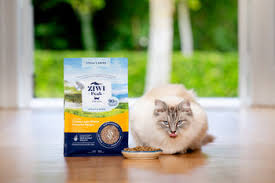
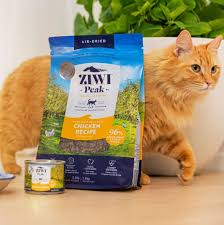
Ziwi Peak
92% Meat · Air-Dried & Wet · New Zealand · Zero Recalls
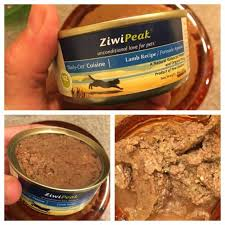
Ziwi Peak produces cat food on the same founding principle as their dog food: 92% ethically sourced meat, organs, and bone from free-range New Zealand farms and sustainable fisheries, with no grains, fillers, artificial preservatives, or artificial colours. Their wet cat food is notable for omitting the standard gelling agents (carrageenan, guar gum) used by most competitors — a meaningful formulation decision for cats with sensitive digestive systems or IBD. Their air-dried range provides the nutritional density of raw feeding in a shelf-stable, safe format. No recalls in over 20 years of operation — across both cat and dog product lines.
Why It Aligns with Shake
- 92% meat, organ, and bone content — true whole-prey nutritional philosophy
- Wet food formulated without standard carrageenan or guar gum gelling agents
- 100% free-range, grass-fed New Zealand sourcing — among the world’s strictest livestock standards
- No grains, no corn, no wheat, no soy — biologically appropriate for obligate carnivores
- Naturally preserved with citric acid and mixed tocopherols — no BHA or BHT
- Zero recalls across 20+ years — an extraordinary record in a recall-intensive industry
Also Aligned
Brands moving in
a conscious direction.
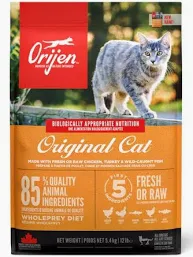
Orijen
85–90% Animal Ingredients · Whole Prey · Grain-Free
Orijen’s cat and kitten food formulates every recipe with 85–90% real animal ingredients — muscle meat, organs, cartilage, and bone from free-run chicken, turkey, wild-caught fish, and cage-free eggs. No wheat gluten, no corn, no soy, no anonymous by-products. Protein content averages 40%+ on a dry matter basis. Consistently rated among the highest-quality dry cat foods available, with a biologically appropriate macronutrient profile for obligate carnivores.
- 85–90% animal ingredients — whole prey nutritional philosophy
- Named, traceable proteins only — no anonymous by-products or mystery meats
- No grains, no artificial preservatives, no artificial colours or flavours
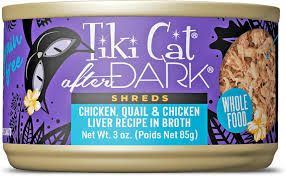
Tiki Cat
High Protein · Whole Fish · Low Carb · Grain-Free
Tiki Cat is built on the premise that cats are carnivores and should eat like it. Their recipes consist primarily of named whole proteins — shredded chicken, whole tuna, wild salmon — with very few fillers, minimal carbohydrates, and no grains. The After Dark range is particularly well regarded for its variety of novel proteins including venison, rabbit, and quail. High moisture, high protein, low carbohydrate — meeting the feline biological baseline that most commercial cat food fails to reach.
- Whole fish and named meat proteins — no anonymous by-products
- Very low carbohydrate content — biologically appropriate for obligate carnivores
- High moisture wet food — supports kidney health and natural hydration
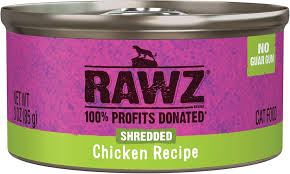
Rawz
96% Meat · Human-Grade · No Rendered Ingredients
Rawz uses 96% real meat in its pâté formulations and is one of the few cat food brands that uses no rendered ingredients of any kind — all proteins are minimally processed whole meats and organs. Human-grade quality standards throughout. Notably free from carrageenan — one of the few mainstream wet cat food brands that has removed this controversial thickener entirely. Ideal for cats with sensitive digestive systems or chronic GI issues.
- 96% meat content — among the highest of any commercial pâté cat food
- No rendered ingredients — all protein from minimally processed whole meats
- Carrageenan-free — a meaningful distinction for cats with digestive sensitivity
Nutrition & Material Awareness
What cats need —
and what most cat food gives them instead.
A domestic cat’s nutritional needs have not changed since domestication. They are obligate carnivores — a classification that is not a preference but a biological imperative. Cats lack the metabolic pathways to synthesise certain essential nutrients (taurine, arginine, arachidonic acid, vitamin A as retinol, niacin) from plant sources. These must come directly from animal tissue. A cat fed on a high-carbohydrate, low-meat diet is not merely eating “less ideally” — it is being systematically deprived of the biological inputs its organs require to function.
Kidney disease now affects approximately 30–40% of cats over 10 years old — a rate that has accelerated in parallel with the commercial pet food era. While genetics and age play a role, most veterinary nutritionists identify chronic dehydration from dry-food diets, and the inflammatory load of low-quality protein and high carbohydrate content, as the primary dietary contributors. The cat food industry has responded not by improving formulations, but by developing prescription kidney diets — sold by the same companies (Hill’s, Royal Canin, Purina) whose standard products contributed to the problem.
Foods That Are Toxic to Cats — Never Feed These
Onions, garlic, and chives (all forms — raw, cooked, powdered) destroy red blood cells and cause potentially fatal anaemia in cats. Grapes and raisins cause acute kidney failure — even tiny amounts can be fatal. Xylitol (artificial sweetener) causes rapid insulin release and liver failure. Chocolate contains theobromine which causes heart arrhythmia and seizures. Raw dough causes bloat and alcohol poisoning as it ferments in the stomach. Alcohol in any form is toxic to cats’ livers and brains. Raw fish fed exclusively over time causes thiamine deficiency — cooked fish in rotation is fine. Dairy — most adult cats are lactose intolerant; milk and cream cause digestive distress despite the cultural image. Liver in excess — nutritious in moderation, but excessive liver feeding causes vitamin A toxicity over time.
The Best Approach — What the Research Supports
The most evidence-supported approach to long-term feline health is a primarily wet food diet built on named whole meats, with low carbohydrate content and adequate taurine from animal sources. A running water source (fountain) dramatically increases a cat’s daily water intake compared to still bowls. Rotating protein sources — chicken, lamb, rabbit, venison, fish in rotation — prevents fixation and provides broader micronutrient coverage. If feeding dry food, choose a high-protein, low-carbohydrate formula (Orijen is the benchmark) rather than the grain-heavy mass-market standard. Introduce variety as early in a cat’s life as possible — palatant addiction is far easier to prevent than to break. And if your cat is currently on Whiskas or a similar brand: the transition is possible, it takes patience, and your cat’s kidney function over the next decade will reflect the effort.
“Your cat’s insistence on Whiskas is not evidence that it is good food. It is evidence that the palatant engineering is working exactly as designed — the same way children prefer ultra-processed snacks engineered to override natural appetite. The food underneath the coating is almost irrelevant.”
Cats are obligate carnivores —
feed them like nature designed them
The best thing you can do for your cat’s kidneys, coat, and longevity
is put real meat in the bowl — not clever chemistry.
Awareness over overwhelm · Clarity over confusion · Conscious choices over blind consumption