Ritual & Wellness — Coffee Makers
Morning rituals,
for Java Junkies ☕
The coffee maker sitting on your counter is used every single morning — hot water passes through its materials before anything reaches your cup. Most people choose based on convenience or aesthetics. Shake asks one more question: what is that water actually passing through?
What to be mindful of
What brews your coffee
seeps into your soul.
Most coffee maker conversations focus on brew quality, temperature precision, and aesthetics. Very few focus on what the hot water is actually touching before it reaches the cup — and why that matters for a ritual repeated every single morning.
Plastic in the brew path
The majority of automatic drip coffee makers route near-boiling water through plastic reservoirs, internal tubing, and brew baskets before it reaches your cup. Heat significantly accelerates chemical leaching from plastic — including compounds that mimic hormones in the body. This is the single most important material concern in coffee equipment.
Aluminium contact with acidic coffee
Traditional aluminium moka pots are iconic, but aluminium is a reactive metal — particularly with acidic liquids like coffee. Over time and repeated use, trace amounts of aluminium can leach into the brew. Stainless steel versions of the same brewing format eliminate this concern entirely.
Pod machines & pressurised plastic
Single-serve pod machines force near-boiling water through small plastic capsules at high pressure. Research has found that this process releases billions of microplastic and nanoplastic particles per serving — making pod machines one of the highest plastic-contact brewing methods available.
Non-stick coated carafes
Some coffee makers and thermal carafes use interior coatings to prevent staining. These coatings can degrade over time — particularly when exposed to acidic liquids at sustained heat. Plain borosilicate glass or uncoated stainless steel are meaningfully safer alternatives.
BPA-free does not mean concern-free
BPA-free labelling has become a common reassurance, but many replacement compounds — BPS and BPF in particular — have been shown to carry similar endocrine-disrupting properties to BPA itself. The safest approach is not to find a safer plastic, but to remove plastic from the brew path entirely where possible.
Daily repetition changes the equation
A single cup of coffee brewed through plastic tubing presents minimal immediate risk. The concern is cumulative — one or two cups every morning, every day, for years. Choosing equipment with an inert brew path is one of the most repeatable, high-leverage conscious choices available in a daily routine.
What to look for
Inert materials. Clean brew paths.
The goal is simple: hot water should only ever touch materials that don’t react, leach, or degrade under sustained heat. Glass, ceramic, and stainless steel are the three materials worth building a conscious coffee ritual around.
Borosilicate glass brewers
Borosilicate glass is chemically inert — it will not react with hot water or coffee acids, and imparts nothing into the brew. Used in laboratory equipment for the same reason, it is the gold standard for brew path materials. Chemex, Hario, and glass French presses all use it.
Ceramic pour-over drippers
High-fired ceramic is completely non-reactive with hot water and coffee. The Hario V60 ceramic version is one of the most widely available trusted options — zero plastic in the brew path, beautiful heat retention, and a design with decades of barista credibility behind it.
Stainless steel water paths
304 and 316-grade stainless steel are non-reactive and will not leach compounds under heat. Brewista and Fellow route water only through stainless steel. Look for this distinction when evaluating kettles and brewers — the water path is what matters, not the outer casing.
Manual brewing methods
Pour-over, French press, moka pot, and AeroPress with stainless components naturally avoid the plastic internal tubing found in automatic machines. Manual brewing also gives full control over water temperature — a meaningful bonus for both flavour and material awareness.
Material transparency from brands
The best coffee equipment brands publish detailed material specifications — exactly what the water path includes, what certifications apply, and what plastics if any are present. Transparency here is a meaningful signal of a brand that takes conscious manufacturing seriously.
Longevity over disposability
A Chemex purchased today should last 20 years. A glass French press or ceramic V60 the same. Conscious coffee equipment is not fast fashion — it is a considered investment in a daily ritual. Equipment designed to last reduces both material exposure and environmental footprint simultaneously.
What brews your coffee,
seeps into your soul
Featured Brand
Chemex
100% Borosilicate Glass • Wood • Leather • Zero Plastic
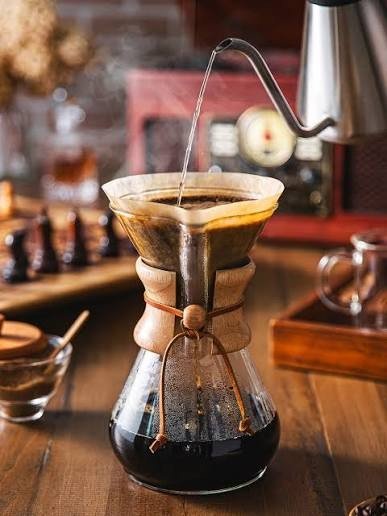
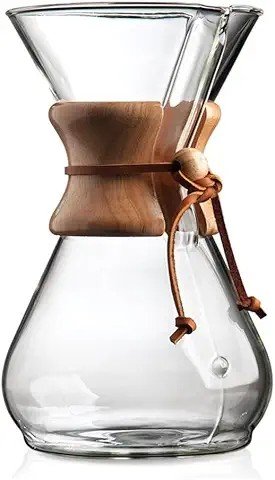
The Chemex has existed since 1941 — and its original design has never needed updating. A single piece of borosilicate glass shaped like an hourglass, with a wooden collar and leather tie. Glass, wood, and leather. That is the entire product. No plastic, no coatings, no internal tubing. Hot water contacts only inert glass from kettle to cup — making it one of the most materially pure coffee brewers ever made.
Why It Aligns
- 100% borosilicate glass brew path — zero plastic contact with hot water
- No coatings, no lining, no reactive materials anywhere in the design
- In the permanent design collection at MoMA since 1944
- Made in the USA with laboratory-grade borosilicate glass
- Thick proprietary filters remove oils, sediment, and bitterness cleanly
- Designed to last decades — the opposite of disposable convenience
Conscious Alternatives
Moving in a more conscious direction.
These brands are not presented as perfect. They represent equipment that removes plastic from the brew path, uses inert materials, and approaches the daily coffee ritual with greater material intentionality.
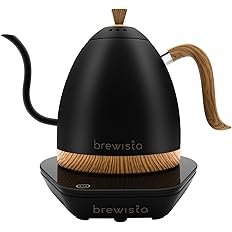
Brewista Artisan
304 Stainless Steel • Precision Temperature • LCD Panel
The Brewista Artisan Gooseneck routes water exclusively through stainless steel — the plastic handle and base never contact the water. LCD panel, precise temperature control to the degree, and a gooseneck spout designed for pour-over make it the ideal conscious companion for any glass or ceramic brewer.
- Water path is 100% stainless steel — plastic never contacts water
- LCD precise temperature control for consistent brewing
- Ideal pairing with Chemex or Hario V60 ceramic
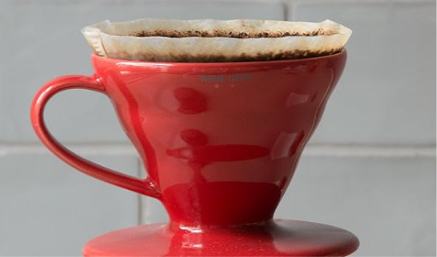
Hario V60 Ceramic
100% Ceramic • Japanese Craftsmanship • Zero Plastic
The Hario V60 Ceramic is made from Arita ware — traditional Japanese porcelain with a 400-year history. Completely non-reactive with hot water or coffee acids, it eliminates any plastic contact in the brew path. Spiral ridges promote even extraction and beautiful heat retention.
- 100% ceramic — fully inert, zero plastic in the brew path
- Traditional Japanese Arita porcelain — durable and non-reactive
- Spiral ridge design promotes even, balanced extraction
Choose ceramic or glass versions only — avoid the plastic V60 which places plastic in the brew path even though it is BPA-free.
Shop on Amazon →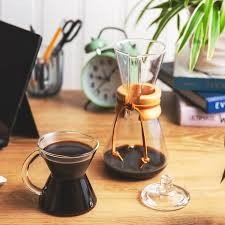
Chemex Classic Bundle
8-Cup • Borosilicate Glass • 100 Bonded Filters Included
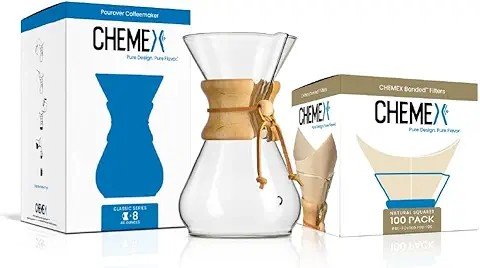
The Chemex 8-cup classic bundle pairs the iconic hourglass brewer with 100 square bonded filters — everything you need to start the ritual. Glass, wood, leather. Nothing reactive. Hot water touches only inert borosilicate glass from kettle to cup.
- 100% borosilicate glass brew path — zero plastic contact
- Includes 100 square bonded filters — full starter kit
- 8-cup capacity — serves the whole household in one brew

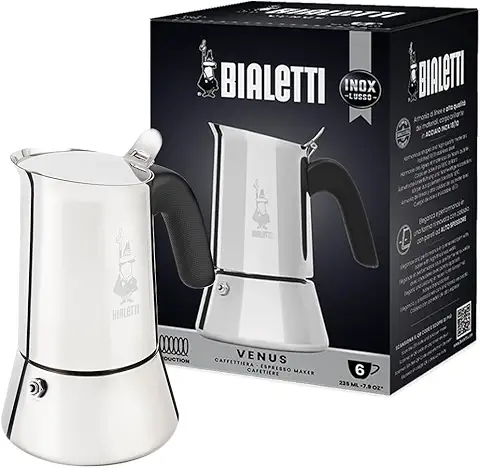
Bialetti Venus
18/10 Stainless Steel • No Electricity • Stovetop Ritual
The Bialetti Venus is built entirely from 18/10 stainless steel — eliminating the aluminium concern of the classic Moka Express entirely. No electricity, no plastic tubing, no pods. A stovetop ritual that has anchored Italian morning culture for nearly a century, now in the most conscious material format available.
- 18/10 stainless steel throughout — no aluminium, no plastic brew path
- No electricity or pods required — minimal footprint daily ritual
- Induction compatible — works on all hob types
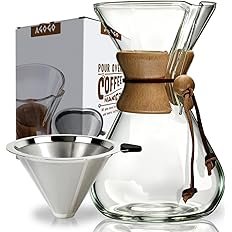
Agogo Pour Over 40oz
Borosilicate Glass • 304 Stainless Filter • No Paper Waste
The Agogo 40oz pour over combines 3.3mm non-porous borosilicate glass with a 304 stainless steel double-layer filter — eliminating both plastic and paper from your brew. No filters to buy, no waste, nothing reactive. A complete kit that ships with everything you need to start brewing consciously.
- Non-porous borosilicate glass — absorbs no odours or chemical residues
- 304 stainless steel double-layer filter — no paper waste ever
- Includes brush and cleaning cloth — zero ongoing consumables
This space is reserved for a brand doing things differently.
If that’s you — we’d love to talk. The Shake Aligned Hub connects conscious brands with readers who actually read the label.
Learn about the Aligned Hub →Fellow × Shake — coming soon
Material & Ingredient Awareness
The vessel is part of the ritual.
Choose it consciously.
Borosilicate glass is the material of scientific laboratories — chosen specifically because it does not react with, absorb, or release anything into the substances it contains. When Chemex chose it in 1941 for a coffee brewer, they were making the same decision a scientist would make: use the most inert material available. That logic is still correct today.
Ceramic — particularly high-fired porcelain — is equally inert. It has been used to contain hot liquids for thousands of years precisely because it does not react. The Hario V60 ceramic dripper connects a 400-year Japanese ceramic tradition to the modern pour-over ritual. These are not new ideas. They are old ones, applied with intention.
The challenge with automatic drip machines is not solvable with better plastic. It is solvable by removing plastic from the brew path. Manual brewing methods do this naturally. The tradeoff is a few minutes of attention each morning. For most conscious households, that attention is already part of the appeal.
“The vessel is not separate from the ritual. What holds your coffee, heats your water, and carries your brew to the cup is part of every sip you take.”
The vessel is part of the ritual,
choose it consciously
Your morning brew begins before the first sip.
In the glass, the ceramic, the steel — and the intention behind each one.
Awareness over overwhelm · Clarity over confusion · Conscious choices over blind consumption