Clothing & Materials — Conscious Clothing
What you wear is either feeding you —
or quietly working against you
Your clothing is your second skin. It sits against your body for hours every day — and unlike food, we rarely ask what it’s made of or what it’s doing. Most modern clothes are made from plastics: polyester, nylon, acrylic, spandex — all petrochemical-derived, all worn directly against the skin. We have a different question here: what does your wardrobe do for your body, your energy, and your long-term wellbeing? Natural fibres aren’t a trend. They’re a return to something your body already knows.
Fabric Resonance — What the Research Suggests
Not all fabrics are equal.
Some work with your body. Some work against it.
Bioenergetic research — including work using the Ag-Environ device by Dr. Heidi Yellen — has explored measurable energetic properties in fabrics. The human body operates as a bio-electric system resonating around 100 Hz. What we drape it in matters more than we’ve been told.
“If it comes from a plant or an animal, it carries life force. If it comes from highly processed oil — it doesn’t.”
Across cultures and even in sacred texts, mixing fibres was traditionally discouraged — not as superstition, but as energetic wisdom. When two different natural fibres are combined (cotton and linen, for example), their frequencies can cancel each other out. For maximum coherence, 100% single-fibre garments are what to seek.
Swipe to see full table →
| Fabric | Source | Status | What to Know |
|---|---|---|---|
| 100% Linen (European flax) | Flax plant | Choose This | Ancient, high-resonance fibre. Naturally antibacterial. Enzyme or dew retting avoids harsh chemicals. Fully biodegradable. Look for OEKO-TEX. |
| 100% Organic Cotton (GOTS) | Cotton plant | Choose This | Resonates near the body’s own frequency. GOTS means grown and processed without synthetic pesticides or toxic chemicals. |
| 100% Hemp | Hemp plant | Choose This | No pesticides, minimal water, improves soil. Durable and softens with age. Rare as a sole fibre in finished garments. |
| 100% Wool (non-mulesed) | Sheep’s fleece | Choose This | Thermoregulating, moisture-wicking, high-frequency. Ensure non-mulesed sourcing. Look for RWS certification. |
| Bamboo (viscose/rayon) | Bamboo + chemicals | With Caution | Usually chemically processed. Without mechanical-processing certification, treat as semi-synthetic. |
| TENCEL / Lyocell | Wood pulp | With Caution | Closed-loop processing, better than synthetics. Still semi-synthetic — not a replacement for linen or cotton. |
| Blended natural fibres | Mixed | Better Than Synthetic | Far better than synthetics but may reduce coherence benefit. Seek 100% single-fibre where possible. |
| Polyester / Nylon / Acrylic / Spandex | Petrochemicals | Avoid | All plastic-derived. Shed nano-plastics now detected crossing the blood-brain barrier. Recycled plastic is still plastic against your skin. |
What to Be Mindful Of
The fabric industry has a transparency problem.
Most clothing labels tell you the fibre content — but almost nothing about how that fibre was grown, processed, dyed, or finished. The six most important things to understand before you buy.
“Eco” Doesn’t Mean Natural
Recycled polyester and recycled plastics are frequently marketed as sustainable — and they may have a lower manufacturing footprint. But recycled plastic worn against skin is still plastic. It still sheds microplastics. It still carries a petrochemical origin. “Recycled” and “natural” are not the same claim.
Toxic Dyes & Chemical Finishes
The fabric itself may be natural, but conventional dyes — particularly azo dyes — can contain carcinogenic compounds that penetrate the skin. Formaldehyde finishes are used to prevent wrinkling and are found in many conventional fabrics. AZO-free, OEKO-TEX-certified, or low-impact natural dyes are what to look for.
The Blend Problem
Most high-street clothing labelled “linen” or “cotton” is a blend — often with polyester for durability or elastane for stretch. Even a small percentage of synthetic fibre introduces micro-plastic shedding. “95% cotton, 5% elastane” is still not a natural-fibre garment for these purposes.
Conventional Cotton’s Chemical Load
Conventional cotton accounts for roughly 16% of global insecticide use despite covering only 2.5% of agricultural land. Those chemical residues don’t disappear in processing. GOTS-certified organic cotton is grown and processed without synthetic pesticides, herbicides, or toxic finishing chemicals.
Bamboo’s Processing Disclosure Gap
Bamboo fibre is almost universally processed using a viscose/rayon chemical process involving sodium hydroxide and carbon disulphide — a harsh industrial solvent. Mechanically processed bamboo is the safe alternative, but disclosure is rare. When a brand doesn’t specify their bamboo processing method, assume chemical processing.
Microplastic Shedding — Every Wash
A single wash of a polyester garment releases hundreds of thousands of microplastic fibres into wastewater. These particles now appear in human blood, lungs, placentas, and breast milk. Nano-plastics — the smallest breakdown particles — have been detected crossing the blood-brain barrier. Every synthetic garment washed contributes to this.
What to Look For
A more conscious wardrobe starts
with a few clear criteria.
You don’t need to replace everything at once. Conscious clothing is about awareness and gradual, better choices — beginning with what sits closest to your skin the longest.
Cover your body in what comes from the earth —
like wrapping yourself in a blanket of love

Featured Brand
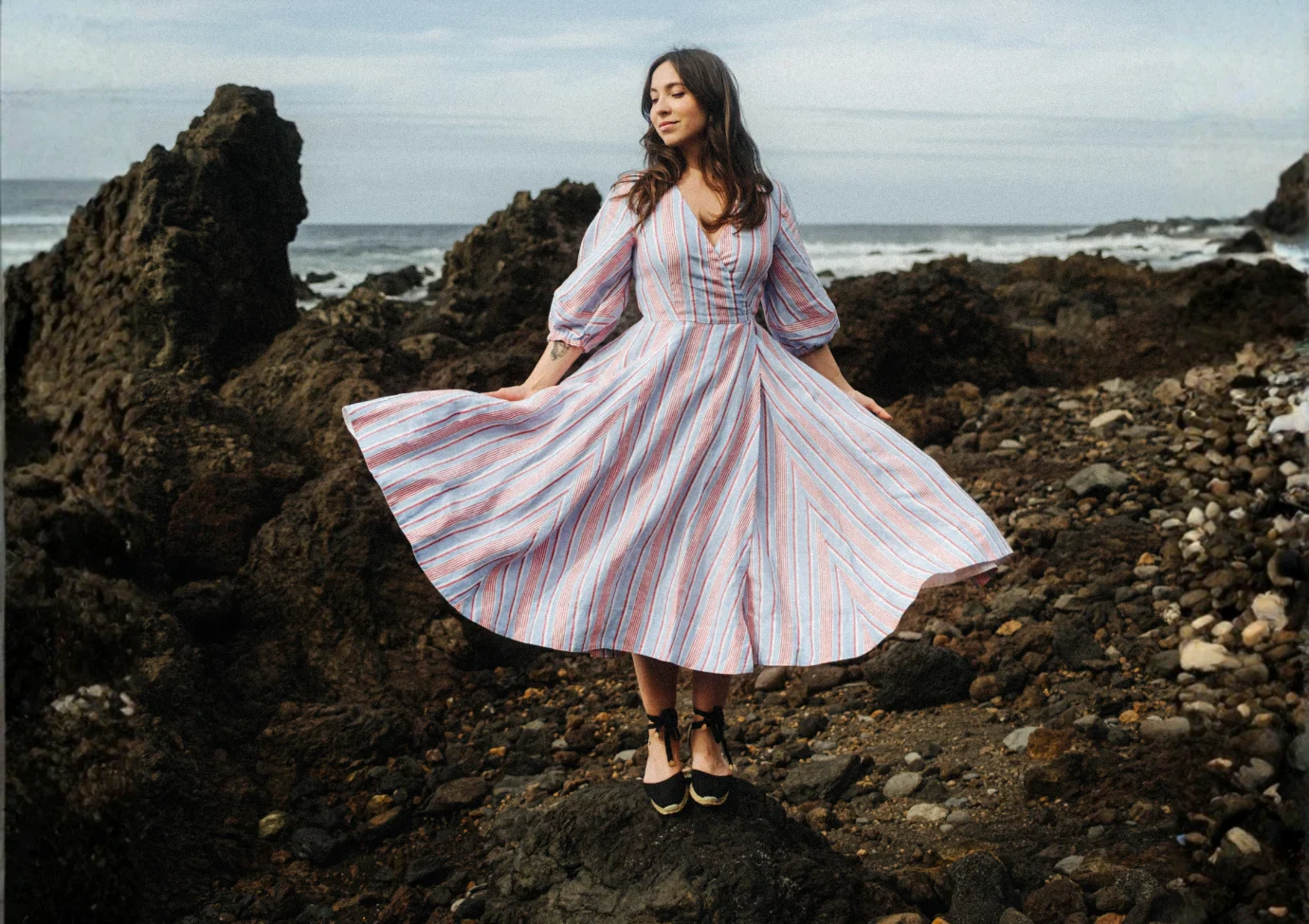
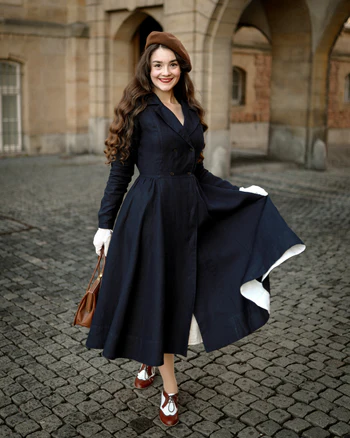
Son de Flor
100% European Linen · Vilnius, Lithuania · Ships Worldwide
Son de Flor was born from a single memory — a linen dress their mother wore on special occasions, cherished for its simplicity and grace. Sisters Vaida and Indrė founded the brand in Vilnius, Lithuania in 2016, recreating that dress as the first piece of what would become a quietly celebrated slow fashion house. Every garment is made from 100% European linen — and nothing else. No blends. No synthetic additions. Sourced from OEKO-TEX certified factories within the EU, cut and sewn in-house by skilled seamstresses paid fair wages, and stone-washed by a small family-owned company for immediate softness. Their linen is traceable from field to finished garment — a full, visible supply chain that is increasingly rare in fashion.
Why It Aligns With Shake
- Every garment is 100% single-fibre European linen — no blends, no synthetics, no compromises
- OEKO-TEX certified fabric throughout, including buttons and trims — tested free from harmful substances
- Made-to-order service available to reduce waste; Pre-Loved resale programme for circular fashion
- Full supply chain transparency — they know everyone who touched the garment before you did
- One Tree Planted partnership — a portion of every purchase contributes to reforestation
- Worldwide shipping; packaging is plastic-free, wrapped in tissue paper and tied with twine
Also Worth Knowing
More natural fibre brands
worth wearing.
Each of these brands approaches natural fibre clothing with genuine commitment to material integrity, non-toxic processing, and ethical production. Check individual product pages for fibre composition — always look for 100% single-fibre pieces.
100% European Linen · Lithuania · Ships Worldwide
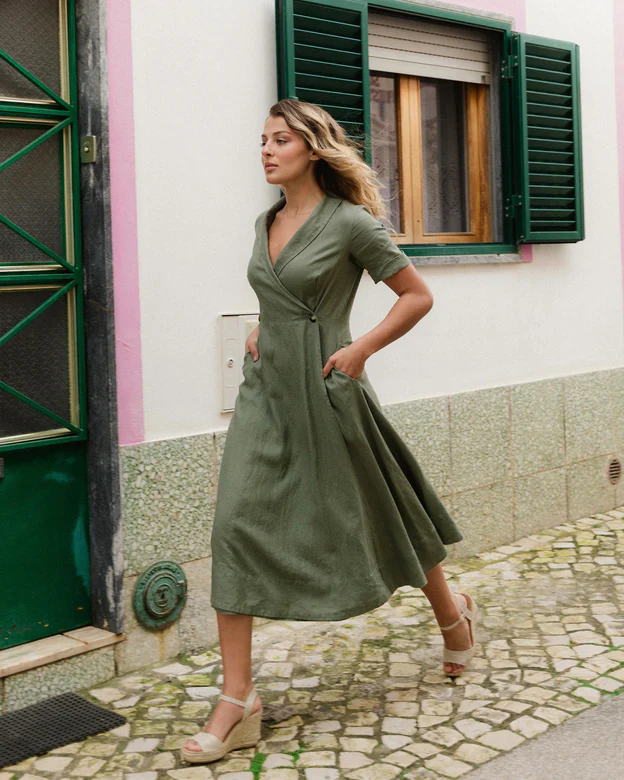
A family-run workshop in Vilnius, Lithuania, MagicLinen does exactly one thing — linen. Every piece of clothing and home textile is made from 100% European flax, handcrafted in-house, and certified under OEKO-TEX Standard 100 (free from harmful substances including azo dyes, PFAS, and formaldehyde). Stone-washed using a water-free mechanical process for softness from the first wear. Wrinkles are a feature, not a flaw — MagicLinen notes that pure linen wrinkles more, which is actually a sign of its purity.
- Exclusive focus on 100% linen — clothing, home textiles, and accessories
- OEKO-TEX Standard 100 certified across all products including buttons and labels
- Worldwide shipping; free on orders over $100 globally; packaging minimal and plastic-free
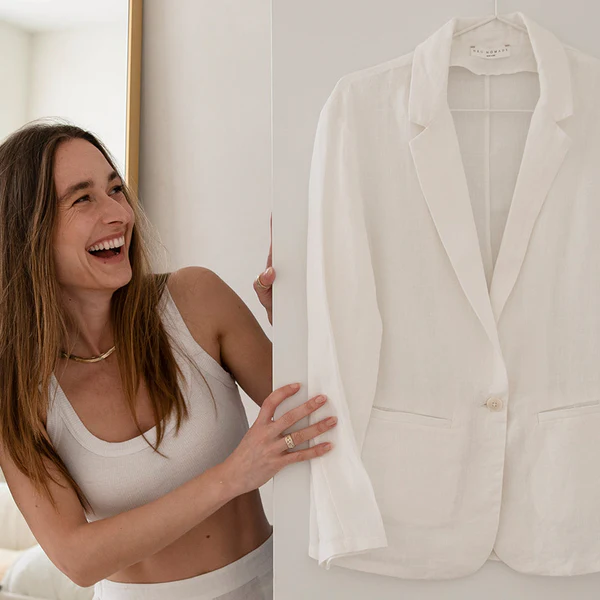
Organic Linen Collection · USA / Lithuania · Ships Internationally
Founded by two women with decades of experience in fashion, Neu Nomads is built on the principle that beautiful clothing should leave no harmful footprint. Their organic linen capsule collection is made from 100% linen, sourced and manufactured in a Lithuanian factory that has run on 100% renewable energy since 2017. Dyes are GOTS and OEKO-TEX certified — AZO-free and applied in a solar-powered dyehouse in Jaipur. Note: Seek their linen-specific pieces; the wider Neu Nomads range includes TENCEL Modal which, while plant-based, is a semi-synthetic.
- Linen collection: 100% organic linen with GOTS + OEKO-TEX certified, AZO-free dyes
- Renewable-energy manufacturing; solar-powered dyehouse; 90% water recycling
- Women-led, women-produced — fair wages confirmed above living wage by co-founders directly
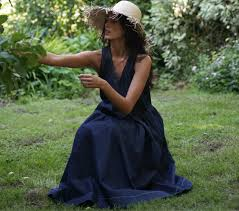
100% GOTS Organic Cotton · UK / Portugal · Ships Worldwide
A UK slow fashion label producing 100% GOTS-certified organic cotton clothing — made exclusively in Portugal and the UK, within the EU’s strict labour and environmental frameworks. Beaumont Organic publishes a full directory of their manufacturing factories — a transparency practice that remains rare in fashion. Two collections per year only, with a pre-loved resale option, and worldwide delivery in recyclable packaging. For those seeking the organic cotton frequency rather than linen, this is the benchmark brand.
- 100% GOTS-certified organic cotton across the core range — grown and processed without toxic chemicals
- Full factory transparency: named suppliers, EU manufacture, publicly audited conditions
- Pre-loved collection; worldwide shipping; free US shipping over $250
Fibre Awareness at a Glance
A quick reference for
conscious clothing choices.
Not every piece needs to be perfect. But understanding where different fibres sit on the spectrum helps you make better choices, one garment at a time. Below is a simplified reference — use it as a starting point, not a rulebook.
100% Organic Cotton
100% Hemp
100% Non-mulesed Wool
100% Silk (ethical)
100% Ramie / Nettle
Mechanically processed bamboo
Natural fibre blends (no synthetics)
Conventional (non-GOTS) cotton
Modal from certified mills
Nylon / PA
Acrylic
Spandex / Elastane
Recycled plastic fibres
Chemically-processed bamboo
Shake — Conscious Clothing
Your body is a receiver.
Dress it in something that knows how to give back. Natural fibres don’t just clothe you — they breathe with you, ground you, and honour the largest organ you have. Choose consciously. Wear it well.
Shake · Conscious Choices · Every Day