
Clothing & Materials — Activewear
Move well —
know what moves with you
Activewear is designed to sit as close to your skin as clothing gets — skintight, sweat-wet, and worn during the moments your pores are most open. Yet most of it is made from petroleum-based plastics: polyester, nylon, spandex. These are the very conditions that maximise chemical absorption. Shake asks: what is your activewear actually made from — and what is it doing to your body while you work on yours?
What’s in your activewear
Most activewear is between
85–100% plastic.
Polyester, nylon, and spandex are all petroleum-derived plastics. The average pair of leggings is 75–92% plastic by fabric composition. The harder truth: you are sweating in them, skin-to-fabric, for hours at a time — during the moments your body is most physiologically open to absorption.
Typical Synthetic Content by Activewear Type
Typical construction: 75–80% nylon + 8–15% spandex, or 85–92% polyester + 8–15% spandex. Both base materials are petroleum-derived plastics.
High spandex content required for support. Worn directly against breast tissue — one of the body’s most hormonally sensitive areas — for hours daily.
Typically 88% polyester / 12% spandex. Moisture-wicking properties require synthetic base. Chemical transfer increases significantly with sweat and friction.
92% GOTS-certified organic cotton / 8% spandex. The minimum spandex required for functional stretch. B Corp and Climate Neutral certified. Currently the conscious benchmark for cotton-based activewear.
97.56% of Icebreaker’s 2024 collection is plastic-free. Core fabrics: merino wool + TENCEL™ Lyocell. Zero synthetic spandex in most styles — stretch achieved through natural fibre engineering.
100% plastic-free activewear. Organic cotton with natural rubber elastic. No spandex, no synthetics. UK-manufactured, farm-to-garment transparency. One of the very few truly zero-plastic activewear brands.
Swipe to see full table →
| Fabric | Origin | Status | What to Know |
|---|---|---|---|
| Polyester | Petroleum-derived plastic | Avoid | Most widely used activewear fabric. Sheds microplastics every wash. Contains BPA, phthalates, and antimony trioxide. Takes 200+ years to biodegrade. |
| Nylon (polyamide) | Petroleum-derived plastic | Avoid | Softer than polyester but equally petroleum-based. Sheds up to 1,900 microfibre particles per wash. Same chemical load as polyester. |
| Spandex / Elastane | Polyurethane plastic | Minimise | BPA found at 22× above safe limits in major brands. 8% or less is the conscious benchmark. Zero spandex achievable via merino wool or organic cotton. |
| PFAS treatments | Synthetic “forever chemicals” | Avoid | Found in “sweat-proof” and “water-repellent” finishes. Absorbed through skin under sweat conditions. Linked to hormone disruption, fertility issues, and cancer. |
| Merino Wool | Natural — sheep fleece | Recommended | Thermoregulating, moisture-wicking, odour-resistant, biodegrades in 1–5 years. ZQ/ZQRX-certified merino is the highest standard. No spandex needed in most constructions. |
| Organic Cotton | Natural — plant-based | Recommended | GOTS-certified covers farming, processing, and dyeing. Best for yoga and low-to-medium intensity training. MATE the Label benchmark: 92% organic cotton / 8% spandex. |
| TENCEL™ Lyocell | Natural — wood pulp | Recommended | Closed-loop, non-toxic process. FSC-certified. Biodegradable. Uses 65% less water than conventional cotton. Excellent blended with merino wool. |
What to be mindful of
You are sweating in plastic —
and your skin knows it.
Activewear is the category where synthetic fabric risk is highest. Skintight fit, heat, sweat, friction, and hours of wear create the precise conditions under which chemical migration from fabric to skin accelerates. Studies confirm that skin absorption of certain chemicals increases by up to 50% when sweating.
01
BPA in leggings — confirmed by testing
The Center for Environmental Health (CEH) found endocrine-disrupting BPA in polyester-spandex sports bras, leggings, and athletic shirts — at levels up to 22 times above California’s safe limit. This wasn’t limited to cheap, fast-fashion brands. Testing found BPA in products from Columbia, Adidas, New Balance, Nike, and Kohl’s. BPA is a xenoestrogen — it mimics oestrogen in the body and has been linked to male and female fertility problems, obesity, Type 2 diabetes, heart disease, cancer, and developmental disorders. It is present because of the chemical structure of spandex-based stretch fabrics — not because of poor manufacturing. It is inherent to the material.
02
Microplastics — shed during every workout
A single synthetic garment releases up to 1,900 microfibre particles per wash. During wear — particularly high-friction exercise — fibres also shed directly against the skin and into the air you breathe. Clothing accounts for an estimated 35% of the world’s primary microplastic pollution. Microplastics have been detected in human blood, lung tissue, placentas, and fetal tissue. They carry adsorbed toxins — PFAS, heavy metals, phthalates — into the body as vectors. A 2024 study confirmed that continuous exposure causes oxidative stress and DNA damage in lung cells.
03
PFAS — the forever chemicals in “performance” fabric
Activewear labelled “moisture-wicking”, “sweat-proof”, or “water-repellent” is very often treated with PFAS. These synthetic chemicals do not break down in the environment or in the human body. A 2024 University of Birmingham study found certain PFAS can be absorbed through human skin. PFAS have been detected in human blood, breast milk, and organs. They are linked to hormone disruption, fertility issues, thyroid disease, immune dysfunction, and certain cancers. The workout conditions — open pores, sweat, heat, skintight fabric — are precisely the conditions that maximise PFAS absorption.
04
Synthetic dyes & skin sensitisation
Most conventional activewear uses azobenzene disperse dyes — synthetic colourants that are known skin sensitisers. Under warm, sweat-wet conditions these dyes migrate from fabric to skin more rapidly. Some azobenzene dyes break down into aromatic amines — compounds with carcinogenic profiles. The vivid, saturated colours of most mainstream activewear are achieved through dye processes with significant human and environmental toxicity.
05
The “recycled plastic” myth
Many activewear brands market recycled polyester — made from PET plastic bottles — as a sustainable choice. It is not a health solution. Recycled polyester sheds the same microplastics as virgin polyester. It still contains BPA and other plastic-derived chemicals. It still takes 200+ years to biodegrade. Recycled synthetics reduce virgin plastic demand at source; they do not reduce your skin’s exposure to plastic during wear.
06
The spandex problem — and the honest position
There is currently no fully natural alternative to spandex that provides equivalent stretch for high-performance activewear. This is the honest reality. The conscious position is not perfection — it is reduction. The benchmark is 8% spandex or less, as pioneered by MATE the Label (92% organic cotton / 8% spandex). Icebreaker achieves stretch in many styles through merino wool fibre engineering with zero spandex. Community Clothing achieves 100% plastic-free through organic cotton and natural rubber.
What to look for
Natural fibres perform.
The science now proves it.
The activewear industry built its performance narrative around synthetics. That narrative is being dismantled — by material science, by independent testing, and by brands proving that merino wool, organic cotton, and TENCEL can match or exceed synthetic performance in most categories.
What you wear to move
should support your body — not work against it



Featured Brand
Icebreaker
Merino Wool · Plastic-Free · ZQ Certified · New Zealand
Icebreaker was founded in 1995 on a single question: why are we making performance clothing from petroleum when nature already engineered the perfect fibre? Their answer was merino wool from New Zealand’s high-country stations — and that conviction has held for three decades. As of 2024, 97.56% of Icebreaker’s fabrics are plastic-free, with a stated goal of 100%. Their core fibres — merino wool, TENCEL™ Lyocell, organic cotton, and linen — are all natural, biodegradable, and sourced with full supply chain transparency.
Why It Aligns with Shake
- 97.56% plastic-free fabric composition in 2024 — the highest standard in performance activewear
- 100% ZQ and ZQRX-certified merino wool — rigorous animal welfare and regenerative farming standards
- Core fabrics biodegrade in 1–5 years — versus 200+ years for synthetic alternatives
- TENCEL™ Lyocell blends using FSC-certified wood pulp via closed-loop non-toxic process
- No synthetic spandex required in most styles — stretch achieved through natural fibre engineering
- Full supply chain transparency — 100% of fabrics, 93% of fibres directly sourced
Also Aligned
Brands moving in
a conscious direction.
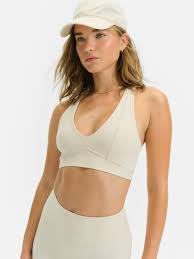
MATE the Label
92% Organic Cotton · B Corp · GOTS · PFAS-Free
MATE the Label has eliminated polyester, nylon, and polyamide from its entire range since 2018. Their MOVE activewear line is built on 92% GOTS-certified organic cotton and 8% spandex — the minimum required for functional stretch and currently the most rigorous cotton activewear standard available. B Corp certified, Climate Neutral certified, and manufactured in Los Angeles.
- 92% organic cotton / 8% spandex — the conscious activewear benchmark
- GOTS, B Corp, and Climate Neutral certified — triple third-party accountability
- Explicitly PFAS-free, BPA-free, formaldehyde-free across the entire supply chain
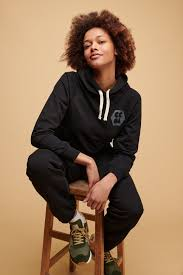
Community Clothing
100% Plastic-Free · Organic Cotton · UK-Made
Community Clothing makes 100% plastic-free activewear — no spandex, no synthetics of any kind. Their sportswear is built from organic cotton with natural rubber for elastic waistbands. Manufactured in the UK from spinning to garment-making, with organic cotton sourced from a family-owned farm in California.
- 100% plastic-free — zero spandex, zero synthetic fibre of any kind
- Organic cotton throughout — from California family farm to UK garment manufacture
- Full supply chain transparency — farm to finished garment, all traceable
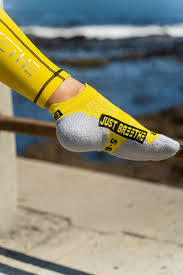
Breeth
South African · Conscious Direction · Natural Focus
Breeth is a South African activewear brand moving in a conscious direction — bringing local manufacturing and a natural-fibre focus to a market dominated by imported synthetics. A brand to watch as the conscious activewear movement grows in southern Africa. Supporting local conscious brands is part of the Shake ethos.
- South African brand — supporting local conscious manufacturing
- Natural fibre focus — moving away from synthetic-dominant activewear
- Community-rooted brand building — aligned with Shake’s conscious living values
Material & Fabric Awareness
The workout that undoes itself —
sweating in plastic.
Exercise is one of the most health-positive behaviours a person can engage in. The irony is that most people exercise in clothing that actively works against the health goals they are exercising for. Open pores, elevated body temperature, sweat, friction, and skintight fit are the precise conditions under which synthetic fabric chemicals — BPA, phthalates, PFAS, synthetic dyes — migrate from fabric to skin most efficiently.
The world’s largest source of primary microplastics is clothing — accounting for an estimated 35% of the total. About 70% of clothes produced globally are made from synthetic (plastic) materials. A single synthetic garment releases up to 1,900 microfibre particles per wash. Microplastics have been detected in human placentas, fetal tissue, lung tissue, and the bloodstream. This is not a future concern. It is the current reality of wearing synthetic activewear.
The BPA Finding in Major Brands
The Center for Environmental Health found BPA — at levels up to 22 times above California’s safe limit — in polyester-spandex activewear from Columbia, Adidas, New Balance, Nike, and Kohl’s. BPA is an endocrine disruptor linked to fertility problems, obesity, Type 2 diabetes, heart disease, and cancer. This is not a quality control failure. It is inherent to the chemistry of spandex-based stretch fabrics.
The Honest Reality on Spandex
There is currently no fully natural, widely available alternative to spandex that provides equivalent stretch for high-performance activewear. Shake’s position is honest: if you need functional stretch, the minimum is 8% spandex or less (MATE the Label’s benchmark). If you can choose zero spandex — merino wool (Icebreaker) or 100% organic cotton (Community Clothing) — that is the higher standard. The direction matters more than perfection.
“You exercise to support your health. What you exercise in should not quietly undermine it. Material literacy in activewear is not a marginal concern — it is one of the most consequential daily exposure decisions most people never question.”
Move well —
in what you know, with what you trust
The best workout is the one that supports every part of your health.
Including what you wear to do it.
Awareness over overwhelm · Clarity over confusion · Conscious choices over blind consumption